ACRO-HT 1Q 2026: Headline Revenue -2.6% On Four-Cause Overlay (2 Divestments + 4 Renovations + 5 Mgmt Transitions + Winter Storm) — 1.0-Year WADM Names The Refinancing Wall, 6 More Hotels Into Renovation
Acrophyte Hospitality Trust released its 1Q 2026 business and operational update on 6 May 2026 reporting a soft headline quarter that is best read as a portfolio in deliberate transition rather than a distress signal. Gross revenue of US$32.6 million fell…
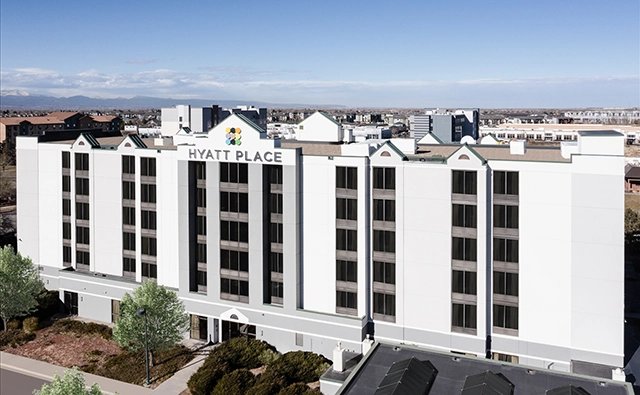
Acrophyte Hospitality Trust on 6 May 2026 released its 1Q 2026 business and operational update — a soft headline quarter best read as a portfolio in deliberate transition rather than a distress signal. Gross revenue of US$32.6 million fell 2.6% year-on-year. Gross operating profit of US$8.4 million fell 10.1%. Net property income of US$4.5 million fell 13.9%. GOP margin compressed 2.2 percentage points to 25.7%; NPI margin compressed 1.8pp to 13.9%. The decline is the visible surface of an active four-cause overlay: dispositions of two non-core hotels (Hyatt Place Detroit Auburn Hills in September 2025 and Hyatt Place Detroit Livonia in March 2026), brand-mandated renovations underway at four hotels in the quarter, property management transitions at five hotels in January 2026, and a severe winter storm that disrupted travel and occupancies across a substantial portion of the 31-hotel portfolio.
Strip the overlay away and a more honest portfolio-in-transition picture emerges. Occupancy actually printed up — 61.8% versus 61.5% a year ago (+0.3pp). ADR firmed to US$132 from US$131.6 (+0.3%). RevPAR ticked up 0.8% to US$81 from US$80.4. The underlying operating signal at the same-store level is positive; the headline translates as soft because there are fewer stores, four of those stores are partly offline for renovation, five had management changes in January, and the weather did its work. Each of the four overlays is either deliberate (dispositions, renovations, management transitions) or exogenous (the winter storm). None of them invalidate the operational read.
Four Renovations Done, Six More Started
Brand-mandated renovations are the dominant operating theme of the year. Four hotels completed renovations during 1Q 2026: Hyatt House Boston Burlington (US$3.7 million capex, 150 rooms), Hyatt House Fishkill (US$3.5 million, 135 rooms), Hyatt House Morristown (US$3.1 million, 132 rooms), and Hyatt House Richmond Short Pump (US$3.4 million, 134 rooms). These are higher-performing assets — Boston Burlington at 83.2% occupancy, Morristown at 74.4%, Richmond Short Pump at 71.9%, Fishkill at 74.7% in FY2024 — that the manager has prioritised first under a stated principle of \"uplifting value and profitability of our higher performing hotels.\" The before-and-after photos in the deck show standard Hyatt House refresh: refreshed soft furnishings, updated lighting, new headboards and case goods, accent-wall colour. Brand-compliant rather than reimagining.
Six additional hotels began brand-mandated renovations during 1Q 2026 with scheduled completion by 3Q 2026: Hyatt House Branchburg (US$3.3 million, 139 rooms), Hyatt House Sterling Dulles Airport North (US$3.9 million, 162 rooms), Hyatt House Raleigh Durham Airport (US$3.4 million, 141 rooms), Hyatt Place Charlotte Airport / Billy Graham Parkway (US$3.0 million, 125 rooms), Hyatt Place Cincinnati Airport Florence (US$3.0 million, 127 rooms), and AC by Marriott Raleigh North Hills (US$1.9 million, 128 rooms). Total brand-renovation capex for 2026 sums to US$18.5 million on top of US$21.0 million in 2025 and US$20.6 million in 2024 — a three-year cumulative US$60 million programme that is meaningfully larger than the underlying US$8-10 million annual portfolio-maintenance run-rate. The balance of the portfolio will require brand-mandated renovations during 2026 and 2027; the manager has flagged that priorities will go to better-performing assets, with disposition considerations for weaker non-core assets.
Disposition Discipline: Detroit Livonia At US$10 Million
On 10 March 2026, the manager completed the sale of Hyatt Place Detroit Livonia for US$10.0 million (US$78,740 per room, 0.0% cap rate on the disclosed metric). Net proceeds were applied to fund renovation capex, pare down bank borrowings, and meet general working capital needs. The disposal is the eleventh hotel exit in four years; the cumulative weighted-average price per room across the eleven divestments is US$84,057 at a 3.1% blended cap rate. Half of those eleven were sold in 2022 when the U.S. hotel transaction market was robust and interest rates were materially lower; since then, disposition pace has slowed to one or two hotels a year — consistent with the broader U.S. hotel transaction market's compression from US$42.6 billion in FY2022 to a US$20-25 billion run-rate range over FY2023-FY2025. U.S. hotel transaction volume was up 14% to US$5.6 billion in 1Q 2026, supported by several large trades and improved lending conditions — a sign the market is reopening but at a more selective, asset-specific cadence than the 2021-2022 cycle peak.
The disposition framework matters because of what the manager said explicitly at the close of the deck: weaker non-core assets are candidates for disposition rather than renovation. With the renovation programme set to extend into 2026 and 2027, the pace of disposals will probably need to compound — both to fund the renovation capex and to right-size a 31-hotel portfolio whose tail of lower-performing assets (several Atlanta-metro Hyatt Places at sub-55% occupancy, for example) is unlikely to clear the brand-compliance bar profitably.
Five Management Transitions In January
Five hotels underwent property management transitions in January 2026. The deck does not name the specific properties or operators involved, but flags transition as a contributor to revenue softness during the quarter — typical for hotel-level management changes that introduce sales pipeline gaps, brand-standard recalibration, and front-of-house personnel turnover during the bedding-in phase. Five out of thirty-one is a meaningful 16% of the portfolio in operator transition at the same moment, and the lag effect typically takes one to two quarters to clear. Watch the 2Q 2026 print for whether the same-store operating numbers (which were already positive in 1Q on a portfolio-wide basis) accelerate as the transition cohort stabilises.
Capital Posture: The 1.0-Year WADM Question
The more consequential read of the quarter is on the capital side. Aggregate leverage moved up to 43.7% at 31 March 2026 from 42.8% at end-2025 — within the MAS 50% cap but tracking in the wrong direction. Net gearing moved to 41.9% from 41.0%. Total debt outstanding stands at US$326.0 million (up US$1.5 million in the quarter). Cash balance fell to US$23.2 million from US$23.9 million. Weighted average debt maturity compressed to 1.0 year from 1.2 years at end-2025 — the more important number, because it names the refinancing window. Average cost of debt eased to 6.1% from 6.4% on refinancing at lower rates; 50.3% of debt remains hedged to fixed (down 0.2pp).
Interest coverage ratio held at 1.6x — above the MAS 1.5x minimum that applies to all S-REITs since the Code on Collective Investment Schemes revision of 28 November 2024 — but the sensitivity table tells the buffer story. A 10% EBITDA decline takes ICR to 1.4x. A 1% rise in interest rates takes it to 1.4x. Either scenario brings the trust below the MAS floor. The manager's framing is that ICR improvement is being driven by operational measures to boost room revenue and control costs, alongside financial strategies including debt refinancing at lower rates and continued hedging — language that confirms management is aware the buffer is finite. NAV per stapled security edged down US$0.01 to US$0.68.
With WADM at 1.0 year and the Fed funds target range held at 3.5%-3.75% with the Federal Open Market Committee pausing further cuts on the back of oil-driven inflation pressure from the Middle East conflict, the cost of any refinancing transaction in the next twelve months is likely to come at a rate close to or above the current 6.1% average. Refinancing at lower rates as a driver of ICR improvement is harder to engineer in this rate environment than the manager's framing implies. The disposition queue — actively selling assets to retire debt at par — is the more reliable lever in the near term, and one of the reasons the renovation-versus-disposition framework that closed the deck is more than rhetorical.
U.S. Lodging Backdrop: Industry Rebound, Cautiously
The U.S. lodging market context matters because ACRO-HT operates entirely in it. U.S. real GDP grew 2.0% in 1Q 2026 on AI-related investment, with unemployment at 4.3% in March 2026 and CPI at 3.3% year-on-year. Industry RevPAR fell 0.3% for full-year 2025 on softening demand from trade- and immigration-policy uncertainty and government spending cuts, then rebounded 4% year-to-date through March 2026 on demand and pricing recovery. Monthly RevPAR ran +5.9% year-on-year in March 2026 — the strongest single-month print since early 2025. CBRE's industry forecast holds occupancy at around 62.2% and ADR at US$163 for full-year 2026 with RevPAR up 1%. Tailwinds named in the deck: higher U.S. tax refunds, FIFA World Cup-driven international visitation, and America's 250th Anniversary celebrations in 2026. Headwinds: heightened geopolitical risks, rising fuel costs, and elevated cost sensitivity among consumers and operators.
ACRO-HT's 1Q 2026 same-store operating signal (+0.3pp occupancy, +0.3% ADR, +0.8% RevPAR) is broadly consistent with — though slightly below — industry-wide YTD March 2026 numbers (US$96 industry RevPAR YTD vs US$92 same period 2025, +4%). The portfolio-level read drag relative to industry mostly reflects the four-cause overlay (dispositions, renovations, management transitions, weather) rather than secular underperformance.
The Read
This is not a beat-and-raise quarter and the manager is not framing it as one. The portfolio is in deliberate transition — through a renovation cycle, through selective dispositions, through management refresh — against a U.S. lodging backdrop that has rebounded but at a pace below 2021-2022 norms and against a refinancing wall that the 1.0-year WADM names directly. The same-store operating numbers are marginally positive; the headline numbers are not. Both readings are honest.
The capital structure is the dominant near-term variable. ICR at 1.6x is above the MAS 1.5x floor but the sensitivity table shows how narrow the buffer is, and refinancing into a 3.5%-3.75% Fed funds environment is unlikely to be net-accretive to the cost of debt. The disposition queue — including potential further exits from the lower-occupancy tail of the portfolio — and the pace at which the 6-hotel 2026 renovation cohort completes and lifts revenue contribution are the two operating levers worth tracking. The renovation programme is being run with discipline; capex intensity is high but visible and bounded. Watch the 2Q 2026 print for management transitions clearing, the 3Q 2026 print for the second renovation cohort completing, and the disposition cadence for any acceleration that would name a structural right-sizing rather than the case-by-case exits seen so far. NAV at US$0.68 against a 43.7% aggregate leverage gives the trust limited cushion to absorb further valuation slippage; the renovation programme's success in re-rating the higher-performing assets it has prioritised is therefore not a quality-of-portfolio question alone — it is a balance-sheet question.