Singapore compounding quietly at +6.2% reversions, S$535.3M divestment lands +22.1% above cost — but North American data centre cracks are widening and two May 2026 non-renewals are on the cards
MIT reported FY25/26 DPU 12.71¢, down 6.3% on the absence of the prior-year divestment-gain top-up — the optical headline. The structural read is more interesting: Singapore is operationally the strongest it has been in years, while North America cracks…
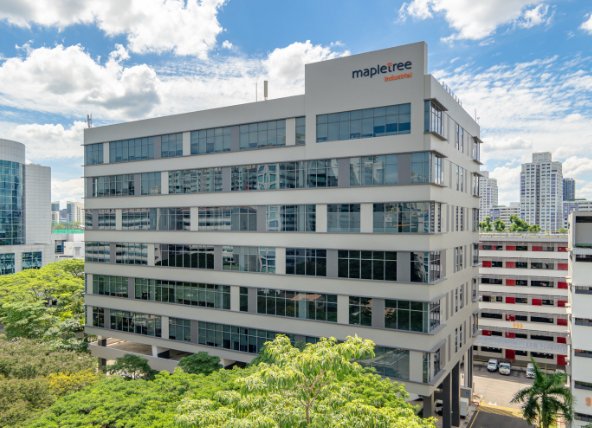
Mapletree Industrial Trust (MIT) on Tuesday 28 April reported a 4Q FY25/26 DPU of 3.09 Singapore cents, down 8.0% year-on-year, on the absence of the prior-year divestment-gain top-up from the 115A & 115B Commonwealth Drive (Tanglin Halt Cluster) divestment that had been distributed across all four quarters of FY24/25. Full-year FY25/26 (year ended 31 March 2026) DPU of 12.71 cents was 6.3% below FY24/25's 13.57 cents. Excluding the prior-year divestment gain, FY DPU would have been down 3.2% year-on-year and 4Q DPU down 4.9% — the underlying operating decline rather than the optical headline. Reported gross revenue and NPI were 7.9% and 8.6% lower for the quarter, and 5.5% and 5.9% lower for the full year. Aggregate leverage stood at 34.0% in the interim, expected to increase to about 37.5% following the redemption of S$300 million existing perpetual securities in May 2026 against the S$300 million 3.25% perpetual securities issued in March 2026. Weighted average debt cost rose modestly to 3.2% in the quarter from 3.1% in 3Q. NAV per unit S$1.63 (vs S$1.71 prior year, -4.7%). Four divestments completed in FY25/26 — three Singapore properties (The Strategy, The Synergy, Woodlands Central Cluster) sold collectively at S$535.3 million on 15 August 2025 at a 2.6% premium to market valuations and 22.1% above original investment cost, plus the Georgia data centre at 2775 Northwoods Parkway, Norcross divested for US$11.8 million at an 18.6% premium to market valuation — totalling S$550.6 million of capital released. CEO Ler Lily, in a Wednesday post-results interview with The Business Times (Chong Xin Wei), telegraphed up to S$500 million to S$600 million of further North American divestments over the next one to two years, naming San Diego as a market where divestment is "definitely on the cards" and flagging Kallang 1 and Kallang 2 (five years of remaining lease) as Singapore properties under review for selective recycling — alongside engagement with JTC for tenure extensions and a stated first entry into Europe.
4Q FY25/26 Gross Revenue S$163.8M (-7.9% YoY); Property Operating Expenses S$43.9M (-5.8% YoY); NPI S$119.9M (-8.6% YoY); Borrowing Costs S$18.7M (-27.4% YoY, an improvement); Cash Distribution Declared by Joint Venture S$5.7M (-5.4% YoY); Amount Available for Distribution S$91.6M (-7.1% YoY); Distribution to Unitholders S$88.2M (-7.9% YoY); DPU 3.09 cents (-8.0% YoY); DPU excluding divestment gain 3.09 cents (-4.9% YoY). FY25/26 Gross Revenue S$673.0M (-5.5% YoY); Property Operating Expenses S$172.6M (-4.3% YoY); NPI S$500.4M (-5.9% YoY); Borrowing Costs S$84.8M (-19.4% YoY, an improvement); Cash Distribution Declared by Joint Venture S$22.4M (-18.4% YoY); Amount Available for Distribution S$374.1M (-5.9% YoY); Distribution to Unitholders S$362.6M (-6.1% YoY); DPU 12.71 cents (-6.3% YoY); DPU excluding divestment gain 12.71 cents (-3.2% YoY). Quarter-on-quarter comparison vs 3Q FY25/26 — gross revenue +0.4% (S$163.1M to S$163.8M), NPI -2.4% (S$122.8M to S$119.9M), DPU -2.5% (3.17 cents to 3.09 cents). Total Assets S$7,938.6M as at 31 March 2026 (vs S$8,800.2M, -9.8% YoY — reflecting divestment proceeds applied to debt repayment plus FX translation losses). Total Liabilities S$2,692.6M (vs S$3,607.7M, -25.4% YoY). Net Assets Attributable to Unitholders S$4,642.7M (vs S$4,887.7M, -5.0% YoY). Net Asset Value per Unit S$1.63 (vs S$1.71, -4.7%). Total Borrowings S$2,786.7M (vs S$3,124.6M at 31 December 2025, -10.8% QoQ — the temporary repayment from new perpetual securities proceeds ahead of the May 2026 redemption). Aggregate Leverage Ratio 34.0% interim, expected ~37.5% post-redemption. Weighted Average Tenor of Debt 3.4 years (vs 2.9 years at 31 December 2025). Interest Rate Hedge Ratio 88.6%. Average Borrowing Cost 3.2% (vs 3.1% prior quarter). Interest Coverage Ratio 4.0 times trailing 12 months (vs 3.9 times). Fitch Issuer Default Rating BBB+ Stable. Portfolio Valuation S$8,213.2M as at 31 March 2026 (vs S$9,040.2M, -9.1% YoY — comprising S$534.8M of properties divested during FY25/26 plus S$233.7M of FX translation impact from USD and JPY depreciation against SGD, leaving an underlying portfolio decline of S$58.5M). Singapore Portfolio S$3,815.3M (-11.7% YoY, of which S$534.8M was divestment-related; same-store SG portfolio of 79 retained properties +0.5% YoY at +S$17.7M from positive rental reversions). North American Portfolio US$3,006.1M (-3.4% YoY in local currency — mainly the valuer's adoption of the sales comparison approach for certain properties reflecting less favourable market assumptions). Japan Portfolio JPY68,200M (+8.4% YoY local currency, anchored by Osaka Data Centre fitting-out completion). Successful issuance of S$300M 3.25% perpetual securities in March 2026, ahead of redemption of existing perpetual securities in May 2026. Portfolio occupancy 91.2% in 4Q (vs 91.4% in 3Q, -20bps); Singapore 93.4% (vs 93.0%, +40bps); North America 86.1% (vs 87.5%, -140bps); Japan 100.0% (flat). 4Q rental reversions in Singapore: Hi-Tech Buildings and Business Space +5.2%, General Industrial Buildings +6.2%, portfolio weighted average +6.2%; tenant retention rate 84.7%. North America Portfolio FY25/26 leasing: c.400,000 sq ft executed (5.6% of NA NLA) including renewals at +3.0% weighted average reversion; backfilled previously vacant 2055 East Technology Circle, Tempe with a 13-year lease; renewed 13831 Katy Freeway, Houston two years ahead of expiry; commenced new 11-year lease at 5150 McCrimmon Parkway, Morrisville and renewal at 21745 Sir Timothy Drive, Ashburn driving NA WALE up from 6.2 to 6.3 years. Top-tenant concentration: HP 6.5%, Global Colocation Provider 4.8% (lease at 2301 West 120th Street, Hawthorne expires May 2026 — c.1.0% of overall GRI), Established Data Centre Operator 4.2%, Global Social Media Company 3.1%, Equinix 2.5%, AT&T 2.5% (lease at 7337 Trade Street, San Diego expires May 2026 — 2.5% of overall GRI), Bank of America 2.4%; top 10 tenants 30.6% of GRI. CEO Ler Lily stated: "FY25/26 was a year of active portfolio management and repositioning, with a clear focus on resilience. We completed divestments totalled S$550.6 million, while placing strong emphasis on operational execution through proactive leasing... Together, these actions strengthen portfolio quality and position MIT for sustainable long-term returns."
1. THE DPU DECLINE IS CARRIED ENTIRELY BY THE NORTH AMERICAN PORTFOLIO — SINGAPORE IS OPERATIONALLY THE STRONGEST IT HAS BEEN IN YEARS, AND THE GEOGRAPHIC BIFURCATION INSIDE MIT IS DEEPENING JUST AS THE MANAGER PREPARES TO ACCELERATE THE NA DIVESTMENT PROGRAMME:
The headline reads as a soft year — DPU down 6.3% reported, down 3.2% on a like-for-like basis. The structural reading underneath is that the entire operating drag on FY25/26 came from one geography. Singapore Portfolio FY25/26: occupancy moved up to 93.4% in 4Q from 93.0% in 3Q, average rental rate held stable at S$2.25 per square foot per month, 4Q rental reversions printed +5.2% on Hi-Tech Buildings and Business Space and +6.2% on General Industrial Buildings (portfolio weighted +6.2%), tenant retention rate 84.7%, and the same-store valuation of the 79 retained Singapore properties (excluding the three divested 15 August 2025) increased S$17.7 million or 0.5% year-on-year specifically attributed by the valuer to "the improvement in operational performance arising from positive rental reversions." This is the strongest operating quarter the Singapore portfolio has had in recent reporting history — the manager described positive rental reversions across all property segments, and the deck explicitly notes the prior 3Q reversion print of +7.1% (above the 4Q +6.2%), confirming a multi-quarter positive trend rather than a single-quarter spike. North America Portfolio over the same period: occupancy fell to 86.1% in 4Q from 87.5% in 3Q (down 140 basis points), one tenant downsizing of office space at the multi-tenanted property at 250 Williams Street NW, Atlanta cited as the specific driver in 4Q, and the manager's outlook section confirmed non-renewal of leases within the North American Portfolio in FY26/27 — flagged twice in the deck and once in the press release as a near-term performance impact. The lease expiry profile detail is unflattering: Data Centre (North America) constitutes about 5.1% of FY26/27 expiring leases by Gross Rental Income, of which approximately 4.7% have already confirmed non-renewal — that is, nearly all of the FY26/27 NA data centre expiries are walking out the door. The two largest near-term losses are explicit in the top-tenant disclosure: AT&T's lease at 7337 Trade Street, San Diego (2.5% of overall portfolio GRI) expires May 2026; the Global Colocation Provider's lease at 2301 West 120th Street, Hawthorne (1.0% of overall portfolio GRI) also expires May 2026. Together these two leases alone account for 3.5% of overall portfolio GRI — and they expire in the first six weeks of FY26/27. Japan, by contrast, sits at 100% occupancy (both quarters), 13.7-year WALE (vs Singapore 2.7 years and North America 6.3 years), and FY25/26 valuation up 8.4% in local currency on the Osaka Data Centre fitting-out completion. The geographic story is therefore not "MIT is weakening" — it is "MIT is structurally splitting into a Singapore-strong-Japan-strong-North-America-weakening shape, with the manager preparing to materially divest the weak leg." The financial drag in FY25/26 is real but its concentration is informative: the manager's strategic response (S$500-600M of further NA divestments telegraphed for the next 1-2 years, capital redeployment into Asia Pacific and Europe) is exactly what the operating data supports. The question for FY26/27 is execution — whether divestment pricing holds up in a market where the same valuer is using sales-comparison approaches that "reflected less favourable market assumptions and property specific risks such as vacancy and near-term lease expirations" to mark down NA properties at the 31 March 2026 valuation. The valuer's revised methodology is itself a forward signal: NA buyer expectations are softer than the prior year's income-capitalisation valuations implied.
2. THE FORWARD STRATEGY IS A CAPITAL-RECYCLING ENGINE AT FULL THROTTLE — S$550.6M ALREADY DIVESTED IN FY25/26 AT 18-22% PREMIUMS, S$500-600M MORE NA DIVESTMENTS TELEGRAPHED FOR FY26/27-FY27/28, AND A FIRST ENTRY INTO EUROPE PUT ON RECORD ALONGSIDE A STATED FOOTPRINT GROWTH IN JAPAN:
FY25/26 was the largest divestment programme in MIT's recent reporting history. Four properties divested at a combined S$550.6 million in sale price, anchored by the 15 August 2025 SG Portfolio Divestment of three properties (The Strategy at 2 International Business Park, The Synergy at 1 International Business Park, and the Woodlands Central Cluster at 33 & 35 Marsiling Industrial Estate Road 3) for S$535.3 million — a 2.6% premium to market valuations and 22.1% above original investment cost — followed by the Georgia Data Centre at 2775 Northwoods Parkway, Norcross divested for US$11.8 million at an 18.6% premium to market valuation. The premium executions are themselves a signal: in a market where NA valuations are softening, MIT achieved 18.6% above the valuer's mark on the Norcross asset, and the SG Portfolio Divestment achieved 22.1% above original cost on properties that were among the lower-occupancy holdings in the Singapore book (The Synergy at 71.6%, The Strategy at 82.1%, Woodlands Central at 95.5%). Capital recycling worked as designed — divest the weaker performers at premium pricing, redeploy into stronger assets. The forward programme is more material in scale. In the post-results interview reported by The Business Times (Chong Xin Wei, Wednesday 29 April), CEO Lily Ler stated MIT plans to divest up to S$500 million to S$600 million of further North America assets over the next one to two years, and that with over S$500 million of divestments already completed plus more divestments planned, "this gives us a nice headroom for acquisitions." Strategy specifics described: a "large portion" of the further-divestment target comprises vacant or near-vacant properties, alongside selected income-producing assets with "limited long-term upside, such as those with low power capacity or weaker re-leasing prospects." A "key data centre market" — San Diego — is "definitely on the cards" for divestment, with the five-storey building at 7337 Trade Street comprising data centre and office space valued at US$49.2 million as at end-March 2026, AT&T occupying approximately 2.5% of MIT's overall portfolio by gross rental income, and the lease expiring in May 2026 — the timing of the lease expiry is itself an enabler of a sale "below valuation if required by market conditions" (manager language). The reciprocal redeployment legs are equally specific: in financial year 2026, MIT completed S$550.6 million of divestments including the sale of the Georgia data centre at US$11.8 million at 18.6% premium over market valuation; the manager also sold two business park buildings and one hi-tech building in Singapore in August 2025 for S$535.3 million at a 2.6% premium over market valuation and 22.1% above original investment cost. On the buy-side, MIT is in "slightly more advanced discussions" on some potential sales and expects to provide updates within the next six months, with North America remaining a key focus for divestments while the trust is also reviewing its local portfolio for further opportunities including properties with shorter remaining lease tenures such as Kallang 1 and 2 (which have about five years left on their leases). Selling such Kallang assets would help preserve capital value (manager language), with the trust also engaging JTC to explore the possibility of tenure extensions, including by securing tenants that align with government priorities. Geographically, while North America remains a key focus for divestments, Ler said the trust is also reviewing its local portfolio for further opportunities. MIT continues to see opportunities in data centres and is looking to grow its footprint in Japan while exploring a first entry into Europe, as it becomes more selective on the US given its substantial existing exposure. "Greater diversification and more exposure to hyperscale tenants would improve the resilience of MIT's portfolio," Ler said. On the potential acquisition of the remaining 50 per cent stake in its portfolio of 13 data centres in its joint venture with sponsor Mapletree Investments, Ler said it would depend on whether the sponsor is willing to divest. She highlighted that the portfolio is of high quality, with more than 50 per cent hyperscale tenant exposure, which MIT would like to increase its exposure to. The capital structure can carry it: aggregate leverage at 34.0% interim with debt headroom to MAS 50% gearing implying roughly S$1.3 billion of additional debt capacity at the cap (and meaningfully more before stretching ICR or cost of capital), the BBB+ Stable Fitch rating intact, the new S$300M perpetual at 3.25% securing capital ahead of the May 2026 redemption. Approximately S$600 million of interest rate hedges expire in FY26/27, and higher borrowing costs from replacement hedges will continue to exert pressure on distributions — the deck is explicit on this — but the capital-allocation room is clearly there to fund a meaningful Asia Pacific / Europe pivot.
3. THE NEAR-TERM DPU FORECAST IS HEADWIND-DOMINATED — THE FY26/27 OPERATING ENGINE FACES THREE STACKED PRESSURES (CONFIRMED NA NON-RENEWALS, ~S$600M HEDGE EXPIRIES REPRICING, USD/JPY-VS-SGD TRANSLATION) BEFORE THE CAPITAL-RECYCLING STRATEGY DELIVERS THE DPU LIFT THE STRATEGY IS DESIGNED TO PRODUCE:
The near-term distribution profile reads softer than the structural strategy implies, and the deck is unusually explicit on three stacked headwinds for FY26/27 that combine to weigh on DPU before the strategic capital recycling delivers any uplift. First, North American non-renewals are confirmed: the deck notes "the confirmed non-renewal of leases within the North American Portfolio in FY26/27" twice — once in the Outlook section and once as a near-term performance flag. The lease expiry profile shows 17.1% of FY26/27 GRI rolling, of which 5.1% is North American Data Centre and 4.7% is already confirmed non-renewing — meaning nearly half a percentage point of total portfolio GRI evaporates with finality in FY26/27, before considering any other NA expiries that may not renew at face. The two named exits — AT&T San Diego (2.5% GRI, May 2026) and Global Colocation Provider Hawthorne (1.0% GRI, May 2026) — together represent 3.5% of GRI walking out in the first six weeks of the new financial year. Second, interest rate hedge repricing: the deck identifies approximately S$600 million of interest rate hedges expiring in FY26/27 and states explicitly that "higher borrowing costs from the replacement hedges will continue to exert pressure on distributions." The 88.6% interest-rate hedge ratio at 31 March 2026 is high quality protection but it locks in current rates only until the maturities; the FY26/27 reset risk is structural and embedded. Average borrowing cost has already started rising — 3.1% in 3Q to 3.2% in 4Q "mainly due to the expiry of interest rate swaps during the quarter, which were previously contracted at a lower rate than the prevailing interest rate" (manager language). Third, FX translation: weaker USD and JPY against SGD weighed on FY25/26 results explicitly (the press release names this as one of three headlining drivers of NPI decline). 71.5% of MIT's debt is USD-denominated providing partial natural hedge for USD revenue, and the manager hedges/derives approximately 92.5% of the next-12-months distributable income in SGD — a robust hedging structure — but reported results still feel translation drag because asset valuations and underlying NPI are quoted in local currency and translated at spot rates. 19.6% of debt is in JPY providing natural hedge for the small Japan portfolio (7.2% of AUM by geography), but the recent strengthening of SGD against both USD and JPY has compressed translated returns. Stacked together, these three pressures imply the FY26/27 reported DPU faces material downside before any operating offset; the offsets are slower to land. Singapore rental reversions of +6.2% on a 2.7-year WALE imply a sustained but not dramatic NPI lift through FY26/27 (the 4Q mark already incorporates the higher rents on roughly 14% of the SG book, with the rest renewing through FY26/27 and FY27/28 at progressively higher base rents). Japan continues to deliver — Osaka fully fitting-out, occupancy 100%, valuation +8.4% — but the small portfolio share (7.2% of AUM) limits the absolute lift. The capital-recycling programme is the structural offset but its DPU benefit lags the divestments by 9-18 months: divest at premium → debt repayment → headroom restored → acquire at higher initial NPI yield in target geography → integrate → stabilise → contribute to DPU. With the FY25/26 divestment proceeds already deployed to debt reduction (visible in the 25.4% YoY drop in total liabilities and the temporary 34.0% interim leverage) and the new acquisition pipeline still being finalised across Asia Pacific and Europe, the timing gap between FY26/27 headwinds and FY27/28+ recycling tailwinds creates a near-term DPU trough before recovery. Two scenarios bracket the FY26/27 outlook: in a scenario where AT&T San Diego is divested at or above book in 2H FY26/27 and one or two Asia Pacific data centre acquisitions complete, the recycling math starts working; in a scenario where the broader S$500-600M NA divestment programme slips and FY26/27 hedge resets exceed budgeted increases, FY26/27 DPU could decline a further 5-7% before stabilising. The manager's framing — "the manager will continue its leasing efforts to improve occupancies, particularly in North America. Active lease management, cost containment and prudent capital management remain the manager's focus to balance the risks and costs in the uncertain macroeconomic environment" — is honest about the need to grind through the headwinds rather than promise rapid recovery.
At MIT's FY25/26 reference close of S$2.06 on 30 April 2026 (per BT report citing Wednesday 30 April afternoon trading at 4.4% lower or S$0.09 down at S$1.97 following the post-earnings session), the trust trades at a P/NAV of approximately 1.21x against the S$1.63 NAV per unit at 31 March 2026 — a premium versus most Singapore industrial REIT peers, reflecting MIT's data centre exposure, BBB+ rating, and Mapletree Group sponsorship. Trailing FY25/26 DPU of 12.71 cents implies a yield of approximately 6.45% at the post-earnings close. Market capitalisation at 2,854 million units in issue is approximately S$5.6 billion at S$1.97 close. Aggregate leverage 34.0% interim, expected to rise to ~37.5% post-perpetual securities redemption — leaving roughly 12.5pp of headroom to the 50% MAS limit and meaningful room for Asia Pacific / Europe acquisitions before equity fund-raise pressure builds. Cash distribution to unitholders for the period 1 January 2026 to 31 March 2026 of 3.09 cents per unit will be paid on Friday 12 June 2026; closure of MIT's transfer books and register of unitholders at 5.00pm on Thursday 7 May 2026. Top-tenant concentration moderate: largest tenant HP at 6.5% of GRI, top 10 collectively 30.6%. Trade-sector diversification across InfoComm 31.5%, Manufacturing 28.5%, Wholesale & Retail Trade 15.1%, Financial & Business Services 13.3%, Others 11.6% — no single sector above 32%. Data centre exposure as percentage of AUM 57.3% (North America 46.5%, Japan 7.2%, Singapore 3.6%) — the highest data centre exposure among Singapore industrial REITs. Lease type mix within data centre portfolio: 76.5% triple net, 12.7% double net and net, 10.8% gross leases — strong cost pass-through structure. Tenant type mix within data centre portfolio: 44.7% Colocation Providers, 25.1% Enterprise / End Users, 22.8% Cloud / Hyperscale Providers, 7.4% Others — the manager explicitly stated intent to rebalance towards Cloud / Hyperscale and Colocation. Sustainability achievements FY25/26 include 2025 Green Lease Leader Silver Recognition for the US data centre portfolio, 329 trees planted across MIT properties and communities, 16% of Singapore portfolio with EV charging points installed (target 30% by FY29/30), and progress against long-term targets to reduce average building electricity intensity by 15% and Scope 2 GHG emissions intensity by 17% by FY29/30 (from FY19/20 base year).
MIT FY25/26 is the year capital recycling went into full throttle and the geographic bifurcation in the portfolio became the central operating story. Reported DPU 12.71 cents down 6.3%; ex-divestment-gain DPU down 3.2% — the underlying operating decline rather than the headline number. The decline is driven entirely by North America: NA occupancy 86.1% (down 140bps QoQ), confirmed FY26/27 lease non-renewals at c.5% of FY26/27 expiring GRI, AT&T San Diego (2.5% GRI) and Global Colocation Provider Hawthorne (1.0% GRI) lease expiries in May 2026, valuer adoption of sales-comparison approach for certain NA properties reflecting softer market assumptions. Singapore is operationally the strongest it has been in recent reporting history — 93.4% occupancy, +6.2% rental reversions, S$17.7M same-store valuation uplift on operating performance — and Japan continues to deliver at 100% occupancy with +8.4% local currency valuation uplift on the Osaka completion. Capital recycling worked at execution: S$550.6M divested at 18-22% premiums in FY25/26, proceeds to debt repayment driving leverage to interim 34.0% and total liabilities down 25.4% YoY. Forward strategy is the most concrete it has been: S$500-600M of further North American divestments telegraphed for the next 1-2 years (San Diego "definitely on the cards"), Kallang 1 and 2 under SG review (five years remaining on leases) with JTC engagement on tenure extensions, growth in Japan footprint, first entry into Europe. The capital structure can carry it — interim 34.0% leverage rising to ~37.5% post-perp redemption leaves c.12.5pp of headroom to the 50% MAS cap; new S$300M perpetual at 3.25%; BBB+ Stable Fitch — but the timing gap is real. FY26/27 faces three stacked headwinds: confirmed NA non-renewals, ~S$600M hedge expiries repricing higher, and continued USD/JPY-vs-SGD translation pressure. The DPU recovery the strategy is engineered to produce arrives with a 9-18 month lag as divest-redeploy-stabilise cycles complete. The investment case for FY26/27: own MIT for the multi-year capital-recycling pivot from US-heavy to Asia-Pacific-and-Europe-balanced, accept the near-term DPU trough as the cost of the geographic re-architecture, watch the AT&T San Diego divestment timing as the leading indicator of execution discipline, and watch the FY27/28 first-Europe-entry announcement as the leading indicator of strategic delivery.