MLT FY25/26: 4 Straight Quarters Of Steady Operational DPU Under Jean Kam, China Reversions Heal −9.4% → −2.0%, S$53.2M Mumbai Grade-A Entry
MLT reported FY25/26 DPU 7.262¢, down 9.8% on the absence of the prior-year divestment-gain top-up — the optical headline. The structural read is that operational DPU has now printed flat-to-positive for four consecutive quarters under Jean Kam's first…
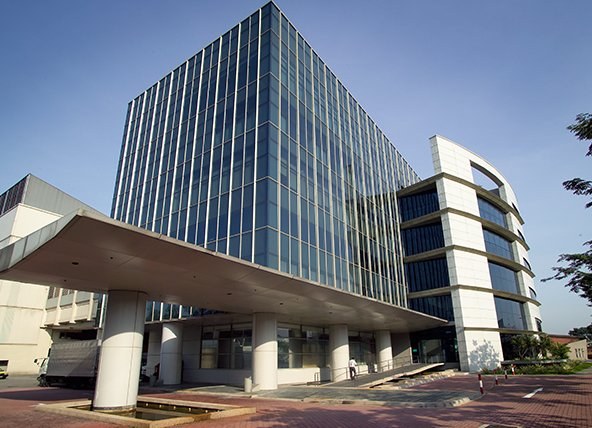
Mapletree Logistics Trust reported 4Q FY25/26 DPU of 1.819 Singapore cents on Thursday 30 April, down 7.0% year-on-year, on the absence of the prior-year divestment-gain distribution of S$7.7 million that had contributed to 4Q FY24/25's 1.955 cents. Full-year FY25/26 (year ended 31 March 2026) DPU of 7.262 cents was 9.8% below FY24/25's 8.053 cents — the optical headline driven entirely by the discontinuation of divestment-gain distributions (S$27.0 million across FY24/25, zero in FY25/26) and an enlarged unit base. Strip the gains and the picture inverts: 4Q FY25/26 DPU from operations rose 0.9% year-on-year and 0.2% quarter-on-quarter to 1.819 cents, marking the fourth consecutive quarter of steady operational DPU under Jean Kam's first full year as CEO of the Manager (Kam succeeded Ng Kiat in July 2024). FY25/26 operational DPU was 3.4% lower at 7.262 cents versus 7.519 cents on an adjusted basis. Reported gross revenue and NPI were 1.7% and 0.9% lower for the quarter, and 2.6% and 2.4% lower for the full year. Excluding the impact of divestments and forex volatility, 4Q gross revenue and NPI would have grown S$3.6 million and S$4.1 million respectively, and FY gross revenue and NPI would have grown S$6.1 million and S$5.4 million respectively — the underlying portfolio is positive same-store. Portfolio occupancy improved 50 basis points quarter-on-quarter to 96.9%, with five markets gaining occupancy and four maintaining full occupancy. Portfolio rental reversion printed +3.3% in 4Q (vs +1.1% in 3Q), or +4.2% excluding China (vs +1.7% in 3Q). China's reversion came in at -2.0% in 4Q — sequentially improved from -2.2% in 3Q and dramatically improved from -9.4% twelve months ago, a 740-basis-point compression on a slope flattening toward zero. The Manager strengthened MLT's India footprint with the 4Q acquisition of a freehold Grade A warehouse in Bhiwandi, Mumbai for INR 3,888 million (S$53.2 million), 100% leased to two listed Indian online food and grocery delivery companies on a 3.9-year WALE with built-in annual escalations — MLT's third Indian city after Pune and Delhi. Six properties were divested in FY25/26 at S$99 million total, at an average premium to valuation of approximately 20%. The Mapletree Joo Koon Logistics Hub (MJKLH) redevelopment was completed and fully leased, with building occupancy reaching 99.3%. Aggregate leverage stood at 40.6% (vs 40.7% at 31 December 2025), with weighted average borrowing cost held at 2.6% per annum and average debt duration extended to 3.6 years. Distribution of 1.819 cents per unit will be paid on 23 June 2026; record date 11 May 2026.
The financial line items map cleanly across both periods. 4Q FY25/26 gross revenue S$176.6 million (-1.7% YoY); property expenses S$25.1 million (-6.3%); NPI S$151.4 million (-0.9%); borrowing costs S$37.5 million (-3.0% — an improvement); amount distributable to Unitholders S$92.97 million (-6.1%); DPU 1.819 cents (-7.0%); excluding divestment gains the adjusted distributable to Unitholders was S$92.97 million (+1.8% YoY) and adjusted DPU 1.819 cents (+0.9% YoY, +0.2% QoQ). FY25/26 gross revenue S$708.3 million (-2.6% YoY); property expenses S$98.1 million (-3.6%); NPI S$610.2 million (-2.4%); borrowing costs S$153.3 million (-2.3% — an improvement); amount distributable to Unitholders S$370.1 million (-8.9%); DPU 7.262 cents (-9.8%); adjusted DPU ex-gains 7.262 cents (-3.4% vs 7.519 cents). Investment properties stood at S$13,076 million as at 31 March 2026 (vs S$12,975 million at 31 December 2025, +0.8% QoQ). Total assets S$13,695 million; total debt S$5,489 million (+S$29 million QoQ, additional loans drawn to fund the Mumbai acquisition and capital expenditure, partially offset by lower translated foreign-currency loans on JPY, HKD and USD depreciation against SGD). Net assets attributable to Unitholders S$6,472 million; NAV per unit S$1.26 (unchanged QoQ); aggregate leverage 40.6% (vs 40.7%); weighted average borrowing cost 2.6% (unchanged); average debt duration 3.6 years (vs 3.5); interest coverage ratio 2.9 times on a trailing-12-month basis. Fitch maintained the BBB+ credit rating with stable outlook. 83% of total debt was hedged or drawn in fixed rates (vs 84% prior quarter), with the 17% unhedged composition split SGD 10%, JPY 6% and others 1%. 75% of next-12-month amount distributable has been hedged into or derived in SGD (vs 74%). Available committed credit facilities of S$716 million stand against just S$83 million / 2% of debt maturing in FY26/27 — the genuine refinancing weight sits in FY27/28 at 15% / S$849 million and FY28/29 at 22% / S$1,200 million.
Portfolio valuation came in at S$13,076 million as at 31 March 2026 (vs S$13,292 million at 31 March 2025, -1.6% YoY) — driven by the divestment of six properties for S$99 million plus a currency translation loss of S$325.0 million, partially offset by a S$47.8 million net fair value gain attributable to gains in all markets except China and Hong Kong SAR, plus the MJKLH redevelopment completion, capital expenditure across the portfolio, and the Mumbai acquisition. Singapore valuation +2.2% YoY in local currency to SGD 2,648 million across 44 properties; Australia AUD 1,110 million across 13 properties (-2.2% local-currency YoY); China CNY 12,892 million across 42 properties (-1.5%); Hong Kong SAR HKD 17,794 million across 9 properties (-1.1%); Japan JPY 217,769 million across 22 properties (+2.4%); Malaysia MYR 2,375 million across 9 properties (+1.8%); South Korea KRW 1,146,900 million across 20 properties (+0.8%); Vietnam VND 7,994,700 million across 12 properties (+6.7%); India INR 10,613 million across 4 properties (+70.4% on the Bhiwandi addition). The 175-property portfolio held S$13.1 billion of assets under management.
Portfolio occupancy improved 50 basis points QoQ to 96.9%, with five markets gaining occupancy: Singapore 96.5% (vs 95.9%, +60bps), China 94.2% (vs 93.8%, +40bps), Hong Kong SAR 98.6% (vs 96.9%, +170bps), Japan 98.6% (vs 98.1%, +50bps), South Korea 97.6% (vs 97.4%, +20bps). Australia, Malaysia, Vietnam and India each maintained full occupancy. 4Q rental reversions were positive across all markets except China: Singapore +5.8%, Japan +6.2%, Hong Kong SAR +0.1%, South Korea +1.9%, Malaysia +3.0%, Vietnam +3.7%, India +5.0%, with portfolio-weighted reversion +3.3% (or +4.2% excluding China). China registered -2.0%, sequentially improved from -2.2% the prior quarter and 740 basis points improved from -9.4% twelve months ago. Weighted average lease expiry by net lettable area was 2.5 years (vs 2.6 prior quarter). The geographic mix of FY26/27 expiring leases is informative — of the 36.0% of portfolio NLA expiring in FY26/27, 20.0 percentage points sits in China, making it the heaviest single-market re-leasing year ahead.
Geographic composition by assets under management as at 31 March 2026: Hong Kong SAR 22.3%, Singapore 20.8%, China 18.3%, Japan 13.4%, Australia 7.7%, South Korea 7.5%, Malaysia 5.9%, Vietnam 3.0%, India 1.1%. By 12-month gross revenue contribution: Singapore 29.9%, Hong Kong SAR 16.9%, China 15.1%, Japan 11.5%, South Korea 7.5%, Australia 7.0%, Malaysia 6.3%, Vietnam 4.7%, India 1.1%. Developed markets continue to account for approximately 70% of the portfolio on both metrics. The tenant base spans 997 customers across 14 trade sectors led by Consumer Staples 15%, F&B 14%, Electronics & IT 10%, Materials/Construction/Engineering 6%, Automobiles 6%, Fashion/Apparel/Cosmetics 6%, Retail 5%, Healthcare 4%, ICT 4%, Furniture/Furnishings 3%, Commodities 3%, Chemicals 3%, Oil/Gas/Energy/Marine 2%, Commercial Printing 1%, Document Storage 1% and Others 17%. Approximately 85% of revenue is served by domestic-consumption tenants; 15% from export-oriented business. The top 10 tenants contribute 19.7% of gross revenue, led by Equinix at 3.7%, CWT at 3.5%, Coles Group at 2.1%, HKTV at 1.8%, S.F.Express at 1.7%, Coupang Inc. at 1.5%, Bidvest Group at 1.5%, YCH Group at 1.4%, Cainiao at 1.3% and GXO Logistics at 1.2%. Single-User Assets account for 21.1% of gross revenue with Japan (19.7%), Australia (19.0%), Hong Kong SAR (19.4%) and Singapore (18.2%) the largest contributors; Multi-Tenanted Buildings deliver 78.9% of gross revenue concentrated in Singapore (31.2%), China (19.4%), Hong Kong SAR (15.3%), Japan (8.1%) and Malaysia (8.1%). CEO Jean Kam, in her first full FY as CEO of the Manager, said in the results commentary: "Despite a challenging operating environment marked by macroeconomic and geopolitical uncertainties, MLT delivered a resilient performance for the year. Our results were supported by stable same-store performance and contribution from our redevelopment project. Through disciplined capital management, proactive refinancing and prudent currency hedging, we mitigated forex volatility and the income impact from divestments."
Beneath the headline, three structural moves frame the strategic direction for the next 18 to 24 months. The first is that the -7.0% / -9.8% DPU prints are arithmetic, not operating. The headline reads as a difficult year — 4Q DPU down 7.0%, FY DPU down 9.8%, reported gross revenue and NPI down across both periods — but the structural reading underneath is that the entire optical decline is the absence of divestment-gain distributions (S$7.7 million in 4Q FY24/25, S$27.0 million across FY24/25; zero in FY25/26 as the divestment-gain top-up programme was discontinued) plus regional currency weakness across HKD, JPY, KRW and VND. Excluding both, 4Q FY25/26 gross revenue and NPI would have grown S$3.6 million and S$4.1 million respectively year-on-year, and FY25/26 gross revenue and NPI would have grown S$6.1 million and S$5.4 million respectively. The underlying portfolio is positive same-store. The four-quarter operational DPU track record is the more informative number for the Jean Kam era: 1.803 cents in 4Q FY24/25 (ex-gains), 1.808 cents in 2Q FY25/26, 1.816 cents in 3Q FY25/26, and 1.819 cents in 4Q FY25/26 — four consecutive quarters of steady operational DPU during the precise twelve months that Jean Kam has been CEO of the Manager. The signal is that the operating engine has held flat-to-positive through a year that included six divestments, India market expansion, the MJKLH redevelopment completion, multi-currency translation drag, and a China reversion environment still printing negative. The 0.9% YoY and 0.2% QoQ growth in 4Q operational DPU is small in absolute terms — but small-and-positive is the point. The forward read matters because FY26/27 starts without a divestment-gain base to compare against. The optical headlines normalise, the operational DPU line becomes the only DPU line, and if management sustains the four-quarter cadence through FY26/27, the trust prints flat-to-positive FY DPU in a year that mathematically frees it from the optical headwind.
The second is that China is healing on a multi-quarter slope, and the trajectory is more durable than the still-negative headline number suggests. The Manager's preferred framing of the rental reversion print is "Portfolio +3.3%, Portfolio ex-China +4.2%" — honest signposting that China remains the structural drag and that the ex-China composition is positive across all eight other markets. But the China line itself is doing important work under the surface. The reversion trajectory over the last four reported quarters: 4Q FY24/25 -9.4%, 2Q FY25/26 -3.6%, 3Q FY25/26 -2.2%, and 4Q FY25/26 -2.0%. That is 740 basis points of compression in twelve months, with the curve flattening as it approaches the zero line. Occupancy alongside is moving in the same direction: China occupancy was 93.8% at 31 December 2025 and 94.2% at 31 March 2026 (+40bps QoQ). The FY26/27 lease expiry profile makes the trajectory matter more, not less: of the 36.0% of portfolio NLA expiring in FY26/27, 20.0 percentage points sit in China — more than half of all FY26/27 expiries. Translation: the China reversion print is the proximate determinant of whether FY26/27 operational DPU holds the four-quarter cadence or breaks higher. Two structural reasons the trajectory is more durable than the headline negative number suggests: first, the comp base is now lapping the deepest part of the rental decline (the -9.4% print twelve months ago is the easier comparable rather than the harder one); second, China is 18.3% of AUM and 15.1% of revenue across 42 properties — too large to divest away quickly, so the rejuvenation has to be operational, and the early evidence is that operational rejuvenation is what's happening. The risk is a second-leg-down in Chinese consumer demand or a fresh round of distribution-centre over-supply in tier-1 cities reversing the slope; the Manager's outlook section flags the evolving Middle East crisis as the macro variable being monitored. But the four-quarter sequence is the actual operating evidence on the table.
The third is that the rejuvenation flywheel is now visible end-to-end — the portfolio rejuvenation strategy is no longer a strategy slide, it has a year of execution behind it. The FY25/26 divestment programme covered six properties across three geographies: 1 Genting Lane, Singapore sold at S$12.3 million against S$9.1 million valuation (+35.2% premium); 8 Tuas View Square, Singapore at S$11.2 million against S$8.0 million (+39.8%); 31 Penjuru Lane, Singapore at S$7.8 million against S$7.3 million (+6.8%); Subang 2, Malaysia at MYR 31.5 million / S$9.5 million against S$7.3 million (+31.3%); Mapletree Logistics Centre Yeoju, South Korea at KRW 8,000 million / S$7.4 million against S$7.3 million (+1.3%); and 28 Bilston Drive, Barnawartha North, Australia at AUD 60.0 million / S$51.0 million against S$47.6 million (+7.1%). Total S$99 million completed at a weighted average premium of approximately 20% over carrying valuation. The capital was recycled into a Grade-A freehold warehouse in Bhiwandi, Mumbai for INR 3,888 million (S$53.2 million) — newly completed in August 2025, 79,378 sqm NLA, 12.5-metre floor-to-ceiling height, 70 kN/sqm floor loading, FM2 floor flatness, IGBC Gold pre-certified, 100% leased to two of India's leading listed online food and grocery delivery companies on a 3.9-year WALE with built-in annual escalations. This is MLT's third Indian city after Pune and Delhi, and the metro entry into Mumbai (population ~22 million) — a strategically named gap in the prior India footprint. Inside Singapore, the Mapletree Joo Koon Logistics Hub redevelopment was completed during FY25/26 and now sits at 99.3% building occupancy with all warehouse units fully leased — proving the redevelop-and-re-lease cycle works on Singapore land. The forward pipeline is concrete: approximately S$1 billion of properties have been identified for divestment, of which approximately half are located in China and Hong Kong SAR — the same two markets driving the largest currency-translation losses and (in China's case) the negative reversion print. Two redevelopment projects are in flight: an ongoing redevelopment at Subang, Malaysia awaiting land amalgamation, and a new redevelopment project being pursued in the eastern part of Singapore.
The Manager's outlook frames the forward period in honest terms. The global economy is navigating a period of uncertainty, as geopolitical conflicts and high energy prices fuel growth concerns and volatility in currencies and interest rates. The immediate impact of elevated oil prices on MLT's operations has been limited as net electricity costs account for less than 2% of total property expenses. Higher borrowing costs and currency volatility are expected to continue, weighing on financial performance. Leasing activity has remained stable so far, supporting the 96.9% portfolio occupancy rate. With the Middle East crisis evolving, the Manager is closely monitoring for second-order effects on broader economic sentiment and leasing demand. Forward priorities under Kam's framing are explicit: preserve portfolio stability through tenant retention, prudent cost management and active lease management; continue the portfolio rejuvenation strategy to unlock value; prioritise healthy occupancy, rental stability and cost efficiency; actively pursue accretive acquisitions, asset enhancements and selective divestments; mitigate currency and interest rate risks through disciplined capital management.
The capital position remains conservative. Aggregate leverage at 40.6% sits 9.4 percentage points below the 50% MAS cap, leaving meaningful headroom for further accretive acquisitions before equity-raise pressure builds. Average debt duration of 3.6 years and weighted average borrowing cost held flat at 2.6% per annum reflect the proactive refinancing execution during FY25/26. 83% of total debt is hedged or drawn in fixed rates; 75% of next-12-month distributable amount is hedged into SGD. Just S$83 million / 2% of debt matures in FY26/27 against S$716 million in available committed facilities — the genuine refinancing weight sits in FY27/28 (15%, S$849 million) and FY28/29 (22%, S$1,200 million). Sustainability execution continued at scale: S$300 million of new green and sustainable financing was secured year-to-date, taking the green and sustainable financing book to S$1.5 billion (~28% of total borrowings). Self-funded solar capacity grew 24% year-on-year to 58.9 MWp; total installed solar capacity reached 131.8 MWp, the largest among S-REITs reported to-date. Green-certified portfolio space rose from 56% to 66% by gross floor area, with 15 additional properties certified across China, South Korea and Australia. Malaysia joined China and Hong Kong SAR in achieving Scope 2 carbon neutrality on market-based emissions. Green leases rose from 51% to 64% of portfolio by NLA. The 2030 carbon-neutrality target for Scope 1 and Scope 2 emissions remains the binding milestone, aligned with the Mapletree Group's 2050 net-zero pathway.
The investment-case framing for FY26/27 lands on the operational DPU line. With the divestment-gain base effect lapped, the optical headwind vanishes, and the four-quarter +0.2% QoQ cadence becomes the FY DPU growth rate if sustained. The most under-discussed signal in the print is the China rental reversion trajectory — -9.4% twelve months ago, -3.6% in 2Q, -2.2% in 3Q, -2.0% in 4Q. 740 basis points of compression on a slope flattening toward zero, in a market that holds 18.3% of AUM, 15.1% of revenue, and 20.0 percentage points of FY26/27 expiring NLA. The rejuvenation flywheel is end-to-end visible for the first time: S$99 million divested at approximately 20% premium across three geographies, S$53.2 million deployed into a Grade-A freehold in Bhiwandi (MLT's third Indian city, metro entry into Mumbai), the MJKLH redevelopment completed and 99.3% leased on Singapore land, and approximately S$1 billion of older-spec properties identified for forward divestment with about half from China and Hong Kong SAR. The watch-this is the China reversion print through FY26/27: a continued slope from -2.0% toward zero on the 20 percentage points of expiring NLA, captured at progressively-less-negative reversions, is the leading indicator that the operating recovery is durable; a reversal back below -3% would signal the slope was a base-effect artefact rather than a genuine market recovery. MLT under Kam has now built one full cycle of evidence — the strategy slide has become a year of execution.