Wee Hur’s Hong Kong Week: A Student-Housing Platform Built in Two Deals
In a single week, SGX-listed Wee Hur announced two Hong Kong student-housing deals — a 246-bed operating asset taken on a master lease (Starvia by Y Suites, Fortress Hill, opening 2H2026) and a wholly-owned Kowloon commercial building it will convert into…
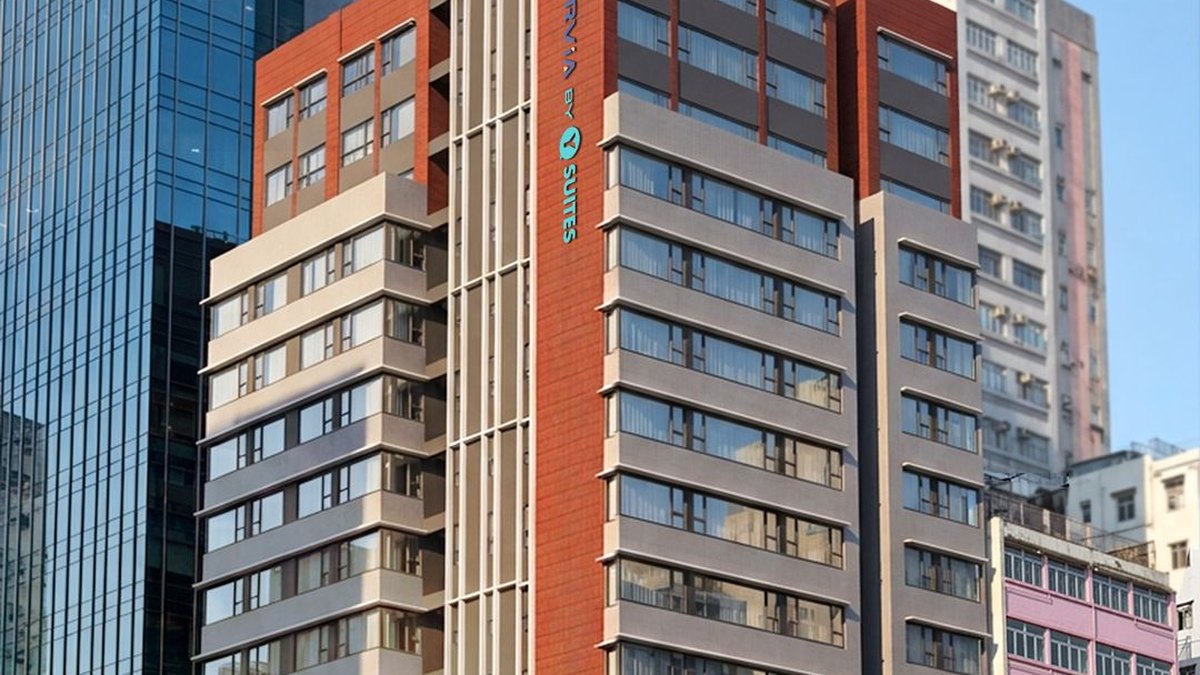
In the space of a week, SGX Mainboard-listed Wee Hur Holdings has announced two Hong Kong student-housing deals — together roughly 750 beds — and in doing so built a platform in a market it had not operated in before. The two assets arrive through different doors: one a 246-bed building taken on a master lease and opening next year, the other a wholly-owned Kowloon commercial block to be converted into about 500 beds by 2028. Both are funded, in effect, by the proceeds of last year’s A$1.6 billion Australian exit.
Two assets, two models
The first, announced on 5 June, is Starvia by Y Suites on Fortress Hill — a 246-bed, 19-storey purpose-built student accommodation asset at 151 King’s Road, taken on a master lease through a joint venture between Wee Hur Hospitality and Starvia Holdings. Sitting directly opposite Fortress Hill MTR station, it offers fully furnished units from studios to four-bedroom shared layouts, with study rooms, a gym, common lounge and 24/7 security; marketing is underway and leasing is expected to begin in the second half of 2026. It is an operating play — recurring income under the Y Suites brand, with no balance-sheet ownership of the building. Eric Wang, deputy general manager of Wee Hur Hospitality, called it an ideal first asset and signalled the group’s intent to build a meaningful presence in the sector.
The second, announced on 9 June, is One Bedford Place — a 26-storey Grade-A commercial building at 100 Bedford Road in Tai Kok Tsui, Kowloon, with a gross floor area of roughly 184,000 square feet and about nine minutes’ walk from Prince Edward MTR. Here Wee Hur is the outright owner, and intends to reposition the building into approximately 500 student beds, with opening targeted for the first half of 2028, subject to regulatory approvals. This is a development play — and a longer-dated one. Wee Hur did not disclose the acquisition price in its announcement.
A policy-backed shortage
Both deals lean on the same demand case, and it is an unusually well-documented one. Government policy is steering Hong Kong toward becoming an international education hub: the non-local student admission quota at publicly funded universities doubled from 20% to 40% in the 2024/25 academic year, with a further rise to 50% pledged from 2026/27. Hong Kong is the only city in the world with five universities ranked in the global top 100, and drew roughly 92,000 non-local students in 2024/25. Against that, Colliers estimates an existing shortfall of around 94,000 beds, with demand projected to reach 172,200 beds by 2028 and a forecast shortfall of about 120,000.
The policy thread runs straight through the second deal. In July 2025 Hong Kong introduced its “Hostels in the City” scheme, which encourages the private-sector conversion of commercial buildings into student hostels. One Bedford Place is precisely that conversion — which is what makes the two announcements read as a single strategy rather than two opportunistic buys: a ready operating asset to capture demand now, and an owned conversion to manufacture new supply into the gap.
The capital behind it
The timing is not incidental. In December 2024 Wee Hur agreed to sell its entire Australian PBSA portfolio — seven operational assets totalling more than 5,500 beds across five cities — to Greystar for an A$1.6 billion headline price, completing the sale in 2025 and retaining a 13% stake. Net proceeds of around S$320 million were earmarked for reinvestment, with the group describing the deal as an exit that would replenish its financial war chest; GIC-linked RECO Weather, a 49.9% co-investor, exited alongside it. The Hong Kong deals are where that capital is being put back to work — and they mark a shift in model: from owning stabilised student accommodation at scale in Australia to a leaner footprint in Hong Kong that pairs an own-brand operating lease with a single owned conversion, run across the Hospitality and Capital arms.
The read
What Wee Hur has assembled is two delivery speeds against one shortage. Starvia turns on recurring operating income from the second half of this year with no capital tied up in bricks; One Bedford Place is the slower, owned bet — development and conversion risk, regulatory approvals, and an opening two years out — but with the upside that comes from creating supply rather than leasing it. The thesis is sell-high, build-into-shortage: realise a mature portfolio near the top in one market, then re-enter another that the data says is structurally short. The swing factor on both is the same — student-inflow policy — and for now it is pointing the right way.
Source: Wee Hur Holdings press releases, 5 June and 9 June 2026 (SGX); The Chief Executive’s 2025 Policy Address, Government of the HKSAR; Colliers, “Building Hong Kong into an International Education Hub,” September 2025. PropertyAtlas.sg analysis with TKRE Research.