BHG Retail REIT FY2025: Margin Compression Headlines — Revenue -9.6%, NPI -11.6%, DPU -42% To 0.29 Cents — But Property Opex -7.2% And Finance Costs -16.7% Are The Manager Doing Real Work Beneath The Top Line
BHG Retail REIT released its FY2025 Annual Report (financial year ended 31 December 2025, letter dated 30 March 2026), bringing forward a year defined by margin compression at the top line and material capital cost discipline beneath it. Gross revenue of…
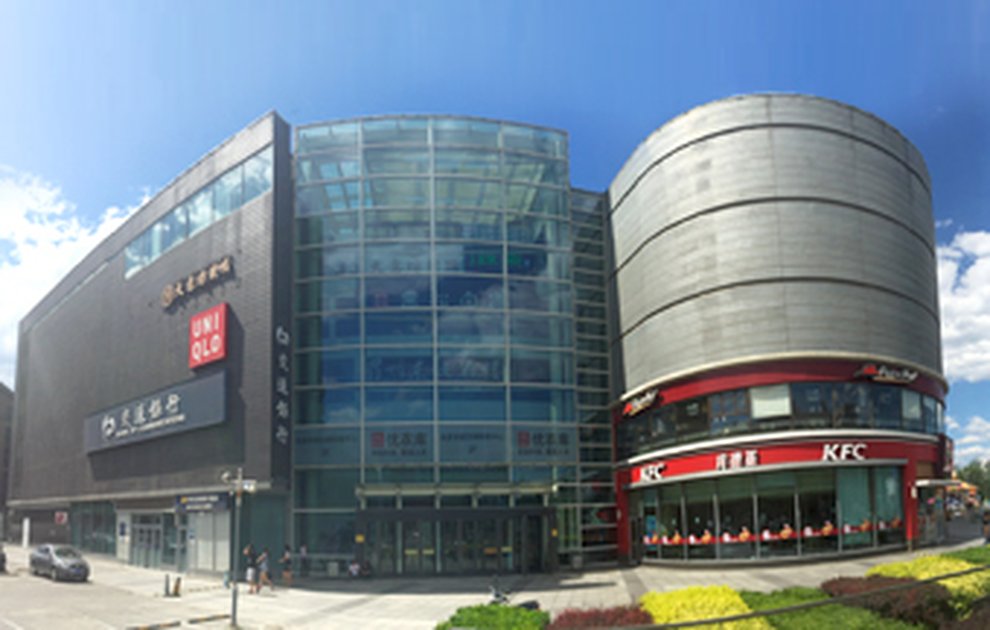
BHG Retail REIT released its FY2025 Annual Report (financial year ended 31 December 2025), bringing forward a year defined by margin compression at the top line and material capital cost discipline beneath it. Gross revenue of S$55.1 million printed -9.6% year-on-year in Singapore-dollar terms (RMB 303.0 million, -7.6% in functional-currency terms); net property income of S$29.0 million was -11.6% in SGD (-9.7% in RMB) on softer leasing conditions and rental support extended to selected tenants in Dalian and Xining. Distribution per unit fell to 0.29 Singapore cents from 0.50 cents in FY2024 — a 42% decline that the manager attributes principally to one-off non-recurring refinancing expenses associated with the March 2025 syndication loan rollover. Portfolio occupancy of 93.4% as at 31 December 2025 is -2.4 percentage points from 95.8% a year earlier, with the slip concentrated in the two Hefei malls (Mengchenglu at 89.9%, Changjiangxilu at 78.4%) where basement areas are undergoing repositioning and tenant rejuvenation. Independent valuation by Knight Frank Petty Limited held the portfolio at RMB 4,694.0 million (S$859.2 million) — -0.7% RMB / -2.9% SGD vs FY2024. The structural read beneath these numbers is the cost discipline working in the manager's favour: property operating expenses fell S$2.0 million (-7.2%) year-on-year on lower utilities and repair/maintenance, and finance costs fell S$3.2 million (-16.7%) on lower interest on floating-rate borrowings and partial principal repayment. Gearing 41.6%; weighted average debt maturity 2.3 years; average cost of debt 4.2% (5.0% including amortisation of loan establishment fees); interest coverage ratio 1.7×. The Manager (BHG Retail Trust Management Pte. Ltd., an indirect wholly-owned subsidiary of Beijing Hualian Department Store Co., Ltd.) won three honours at the Global CSR & ESG Awards 2025 including Gold for Best CEO. Board roster unchanged from FY2024: Chairman Mr Gan Chee Yen, IDs George Quek Meng Tong and Ong Tze Guan, NEDs Xiong Zhen and Peng Ge; management team led by CEO Ms Chan Iz-Lynn and CFO Mr Victor Ten with four supporting heads.
The Margin Compression: -9.6% Gross Revenue, -11.6% NPI
The headline financial picture for FY2025 is a portfolio operating into softer Chinese retail leasing conditions. Gross revenue of S$55.1 million is down -9.6% from S$61.0 million in FY2024 in Singapore-dollar terms, and down -7.6% from RMB 328.0 million to RMB 303.0 million in the underlying RMB functional currency — meaning the SGD print is amplified by approximately 200 basis points of FX translation effect on top of the genuine RMB-currency operational decline. Net property income of S$29.0 million is -11.6% in SGD and -9.7% in RMB, with the wider NPI-vs-revenue decline reflecting the operating-leverage compression that runs both ways: when revenue falls and a meaningful portion of property expenses are fixed or semi-fixed, NPI compresses faster than the topline.
The manager attributes the revenue softness to lower occupancy rates and rental support provided to Dalian and Xining during the period. Both Dalian Jinsanjiao and Xining Huayuan are master-leased to Beijing Hualian Life Supermarket Co., Ltd. (a related party within the Beijing Hualian Group structure), and both held 100.0% occupancy across the year — meaning the rental support narrative is about negotiated lease terms with the related-party master tenant rather than physical vacancy. The two assets together contribute approximately 6% of FY2025 gross revenue (S$3.4 million) but 10.5% of NPI (S$3.0 million) at a meaningfully higher margin than the multi-tenanted assets, so even modest rental concessions on these two ripple through into the NPI line.
By property breakdown, the revenue distribution remains heavily Beijing-Wanliu-centric: 60.0% of FY2025 gross revenue (S$33.1 million) and 68.5% of NPI (S$19.9 million) come from the 60%-owned Beijing Wanliu mall, with Chengdu Konggang the second contributor at 21.0% of revenue (S$11.5 million) and 18.0% of NPI (S$5.2 million). The two Hefei malls together contribute 12.8% of revenue but only 3.0% of NPI — Hefei Mengchenglu printed an NPI of just S$0.1 million on revenue of S$3.0 million (a 3.4% NPI margin against a typical 50%+ margin for the multi-tenanted Beijing and Chengdu assets), and Hefei Changjiangxilu printed S$0.8 million NPI on S$4.1 million revenue (19.6% margin). Both Hefei assets have basement areas undergoing repositioning and tenant rejuvenation, which both compresses headline occupancy figures (committed occupancy excludes the basement areas under repositioning) and pulls the operating margin down through the period of reconfiguration.
The Capital Cost Discipline: Finance Costs -16.7%, Property Opex -7.2%
Beneath the top-line decline sits the manager's active cost management, which is doing material work on the bottom line. Property operating expenses declined by S$2.0 million (-7.2%) year-on-year in Singapore-dollar terms, the manager attributing the saving to lower utilities and repair/maintenance costs during the period. Finance costs declined by S$3.2 million (-16.7%) year-on-year — the larger single driver of cost relief — explained by lower interest expenses on floating-rate borrowings reflecting the easing rate environment, plus a partial repayment of loan principal that reduced the outstanding balance against which interest accrues.
The capital structure context: the REIT's borrowings as at 31 December 2025 comprise two onshore secured RMB facilities (RMB 192.5 million and RMB 104.5 million notional, of which RMB 178.5 million and RMB 99.1 million were drawn down, equivalent to S$63.4 million combined) plus an offshore secured S$252.0 million facility (fully drawn). Total drawn borrowings of S$305.4 million against total assets attributable to Unitholders implies a gearing of 41.6%, computed on the principal-attributable-to-Unitholders basis used by S-REIT disclosure conventions. More than 80% of borrowings are denominated in Singapore dollars (the offshore facility), with the remainder in onshore RMB facilities providing a natural hedge for the Chinese property income stream that ultimately repays the offshore debt via dividend remittance.
The headline syndication loan rollover completed in March 2025 is the structural capital event of FY2025. The manager describes it as having "strengthened the REIT's debt profile" and "demonstrated the continued support from our banking partners" — language that suggests the refinancing was completed against a more cautious credit backdrop than the prior round, with the one-off non-recurring refinancing expenses (legal, advisory, arrangement fees, possibly waiver and consent fees) being the principal explanatory factor for the year-over-year DPU compression from 0.50 cents to 0.29 cents. With weighted average term to maturity of 2.3 years as at 31 December 2025, the next material refinancing window is March 2028 — though portions of the onshore RMB facilities may turn over sooner depending on their individual maturity profiles.
Interest coverage ratio at 1.7 times provides a structural read on the balance between operating cash generation and debt service. Under the CIS Code prescribed sensitivity scenarios, ICR would compress to 1.6 times under a 10% decrease in EBITDA, and 1.5 times under a 100 basis-point increase in weighted average interest rate. Both stress prints sit at or near the 1.5× minimum that the Code requires for REITs operating between 45% and 50% gearing; while BHG REIT's headline gearing of 41.6% sits comfortably below the 45% threshold and below the 50% regulatory ceiling, the proximity of the stressed ICR to the 1.5× floor is the structural watch-item if either revenue compression deepens further or rates reverse course.
Hefei Repositioning + Portfolio Tenant Rejuvenation
The two Hefei properties — Mengchenglu (occupancy 89.9% vs 94.1% in FY2024) and Changjiangxilu (78.4% vs 87.5%) — are the active repositioning surface of the portfolio. Both malls have basement areas undergoing repositioning and tenant rejuvenation; the committed-occupancy disclosure excludes these basement areas, meaning the reported figures reflect the above-ground tenant mix while the basement reconfiguration runs in parallel. The economic logic is the standard mid-life mall reset: clear the under-performing basement tenants, redesign the layout to better support the categories driving footfall, and re-lease at higher per-square-metre rents into a fresh tenant cohort that contributes to the mall's overall draw rather than diluting it.
Across the wider portfolio, FY2025 saw active tenant rejuvenation that the manager is positioning as evidence of continued landlord-tenant pull even into a softer leasing market. New anchor additions include Xiaoxiang Supermarket (小象超市) — a digitalised retail format launched by Meituan, making its first entry into Beijing at the Wanliu mall, anchoring daily-consumption needs and signalling continued tenant interest in the catchment. International F&B brands Domino's Pizza and Dairy Queen commenced at Chengdu Konggang. Technology and lifestyle additions at Beijing Wanliu include IM Motors, Vivo Mobile, Honor Mobile, Xiaomi, Bambu Lab and the Dream Chaser XR Centre. Experiential entries include the Xin Tan Counter-Strike Experience Centre at Hefei Mengchenglu and Jiuji Durian & Beef Buffet Hotpot at Hefei Changjiangxilu. Miniso opened a new flagship at Chengdu Konggang, capturing the expanding collectible-toys category.
The trade-sector mix on the multi-tenanted assets shows Fashion & Accessories at 33.9% of gross rental income, F&B at 30.3%, Kids' Education & Retail at 13.3%, Leisure & Entertainment at 11.2%, Beauty & Healthcare at 7.6%, and Supermarket at 3.7% — a balance that the manager is actively reshaping toward higher experiential content (entertainment, kids' education, beauty) and away from pure fashion exposure as e-commerce continues to compress physical-retail apparel margins. Top-10 tenant concentration at 18.3% of gross rental income (down from 24.0% in FY2024) is structurally healthier — the December 2024 top-10 list was distorted by BHG Supermarket (master tenant for Xining and Dalian) appearing once as a 15.0% aggregate position; the December 2025 disclosure reports BHG Supermarket at 7.3% reflecting the master-leased properties only, with the other top-tenant slots filled by the multi-tenanted asset tenants.
Beijing Wanliu and Hefei Changjiangxilu both celebrated their 15th anniversary in 2025 — both opened in 2010 — anchoring the manager's positioning of the portfolio as community-embedded retail with established neighbourhood pull. The lease expiry profile shows 57.1% of gross rental income rolling in FY2026 (35.7% by net lettable area), with FY2027 a further 13.7%/13.7%. The heavy FY2026 expiry concentration is the next operational watch-item: the manager will need to re-contract more than half of the portfolio's rental income across the coming twelve months in a market where the China consumer spending recovery is still building.
China Retail Context + The Forward Read
The macroeconomic backdrop the manager frames the FY2025 result against is China's 5.0% GDP growth in 2025, urban disposable income growth of 4.3%, and retail sales of consumer goods growth of 3.7% — supportive but not robust. The "consumer goods trade-in program" referenced in the Letter to Unitholders is the State Council programme expanded in early 2024 and renewed for 2025 that provides subsidies for consumers trading in older durable goods (appliances, vehicles, electronics) for new ones, with the Ministry of Commerce reporting the programme drove substantial uplift in covered categories. For BHG REIT's neighbourhood mall positioning, the trade-in policy provides incremental footfall support to the malls' technology and electronics tenants (the IM Motors, Xiaomi, Vivo, Honor additions during FY2025 are partially positioned against this), without being a direct driver of the daily-consumption F&B and supermarket categories that anchor the portfolio's revenue base.
The forward read combines the operational ambition (Hefei basement repositioning completing through FY2026, continued tenant rejuvenation, FY2026 lease re-contracting at potentially flat-to-modestly-positive reversions in a competitive market) with the financial discipline that has carried FY2025 (continued cost optimisation, the next refinancing window not landing until the syndication facility's 2.3-year residual term plays out, and the manager's stated focus on maintaining liquidity, managing refinancing risks prudently, and aligning capital structure with portfolio sustainability). At a closing unit price of S$0.435 as at 31 December 2025 against the FY2025 DPU of 0.29 Singapore cents, the trailing distribution yield is 0.67% — meaningfully below the broader S-REIT cohort average and reflecting both the cyclical DPU compression and a structural discount the market applies to pure-play China retail exposure under a Chinese sponsor structure.
Key Takeaway
BHG Retail REIT FY2025 is a print where the top-line story (gross revenue -9.6% in SGD, NPI -11.6%, DPU -42% to 0.29 Singapore cents) reads worse than the underlying operational story (property opex -7.2%, finance costs -16.7%, and a syndication loan rollover that consumed one-off costs but extended debt maturity discipline). The portfolio is concentrated — Beijing Wanliu at 53.4% of valuation and 60% of revenue is the structural anchor — and the active repositioning surfaces (two Hefei basement reconfigurations, ongoing tenant rejuvenation across all six malls) are the operational levers the manager is pulling to defend per-square-metre productivity into a softer Chinese retail environment. With gearing at 41.6%, ICR at 1.7× and the next material refinancing window into 2027–28 once the March 2025 syndication facility's 2.3-year residual rolls, the capital-stack constraint is the variable to watch alongside FY2026's 57.1%-by-GRI lease re-contracting cycle. Watch the 1H FY2026 print for the early read on whether the Hefei basement repositioning is converting into above-ground rent uplift, and whether tenant rejuvenation initiatives are stabilising headline occupancy back toward the 95%+ range that prevailed pre-FY2025.