PLife REIT 1Q FY2026: Mount Elizabeth's S$350M Project Renaissance Completes With Green Mark Platinum, DPU +15.1% On Singapore Rent Review Step-Up, 5 Miyako Properties Repossessed In Osaka, Maiden Green Bond + Social Loan Extend Debt Maturity
Parkway Life REIT on Thursday 30 April 2026 released its 1Q FY2026 business update (quarter ended 31 March 2026) with the structural seam of four years compressed into a single quarterly print: Project Renaissance — the S$350 million renewal capital…
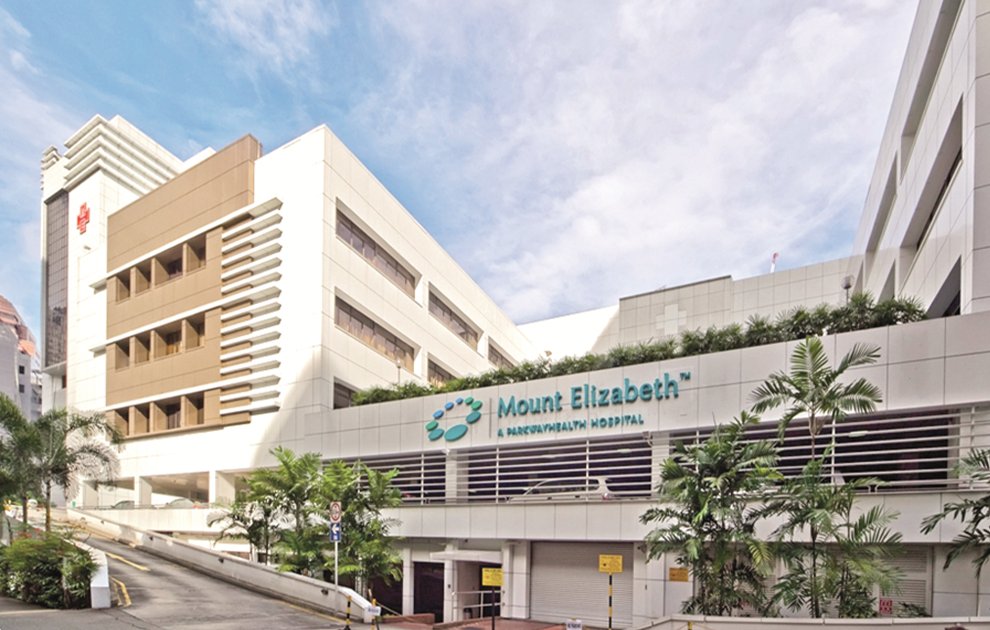
Parkway Life REIT on Thursday 30 April 2026 released its 1Q FY2026 business update — the structural seam of four years compressed into a single quarterly print. Project Renaissance, the S$350 million renewal capital expenditure for Mount Elizabeth Hospital jointly funded with IHH Healthcare Singapore, completed in February 2026, three years and five months after Unitholders' approval at the 30 September 2021 EGM. The new Annual Rent Review Formula for the three Singapore master leases kicked in for the first non-step-up year, lifting the FY2026 minimum aggregate rent to S$99.1 million — a +24.3% step over the S$79.7 million payable in FY2025. The Japan portfolio absorbed a tenant default, with Miyako Group entering liquidation proceedings (Miyako Enterprise corporate rehabilitation filed 31 December 2025; Miyako Kenkoukai bankruptcy filed 15 April 2026), prompting the manager to repossess five Osaka properties in January and February 2026; affected rental represents approximately 1.6% of FY2026 portfolio gross revenue, with 4–8 months of security deposits held against outstanding obligations. The Sustainable Financing Framework was established in early 2026 and operationalised through an inaugural 5-year S$70.0 million fixed-rate green bond at 2.103% per annum and a maiden 10-year JPY8.8 billion (~S$70.9 million) social loan that pre-emptively terms out the JPY8.8 billion loan facility maturing in 4Q 2026 — extending weighted average debt term to maturity from 3.0 years to approximately 3.8 years. Headline financials: gross revenue S$38.2M (-2.1% YoY) and NPI S$35.85M (-2.7%) printed red on JPY depreciation and the Japan exit, but DPU of 4.42 cents represents +15.1% YoY (1Q FY2025: 3.84 cents), with hedging gains compensating the FX drag and the Singapore rent reset providing the underlying lift. Gearing 34.2%, all-in debt cost 1.66%, interest cover 8.4 times, ~96% of interest rate exposure hedged.
Project Renaissance Closes The S$350 Million Renewal Capex Loop
The completion of Project Renaissance in February 2026 closes an arc that began at the 30 September 2021 EGM, when 99.99755% of Unitholders approved the proposed master-lease renewal transaction for the three Singapore hospitals — Mount Elizabeth Hospital, Gleneagles Hospital and Parkway East Hospital — with Parkway Hospitals Singapore Pte Ltd, the wholly-owned IHH Healthcare Berhad subsidiary that operates the assets. The transactional agreements were executed on 13 October 2021. The renewal term runs 20.4 years from 23 August 2022 to 31 December 2042, with an option to extend for a further 10 years. Embedded in the renewal package was the commitment to renewal capital expenditure of S$150 million (the underwritten quantum disclosed in the 8 September 2021 circular); the executed quantum at completion is S$350 million, jointly funded with IHH Healthcare Singapore — the difference reflecting expanded scope around M&E upgrades, space reconfiguration and sustainability enhancements that materialised during execution.
The sustainability scope is what carried the project to a provisional Green Mark Platinum certification from Singapore's Building and Construction Authority — the highest rating in BCA's sustainability framework. Green Mark Platinum is the operational signal that the refurbishment carries the carbon-and-energy-performance attributes required to underwrite the long-tail master lease economics across the 20.4-year renewal term (and the 10-year option beyond), and is the structural prerequisite to PLife REIT's Sustainable Financing Framework deploying capital against the upgraded asset.
Mount Elizabeth Hospital, at 3 Mount Elizabeth in Singapore's Orchard medical cluster, anchors the Singapore portfolio at an appraised value of S$1,014.6 million as at 31 December 2025 — 58.2% of the Singapore portfolio's S$1,743.5 million total. The asset is held on a 67-year leasehold with 278 hospital beds, 58,139 square metres of gross floor area across the hospital and medical centre buildings, and a triple-net lease structure to PHS that puts property tax, property insurance and property operating expenses on the tenant rather than the trust. The completion of Project Renaissance is the operational predicate to the rental escalation step disclosed in this quarter's update — and to the asset-quality positioning of the Singapore portfolio against competing local healthcare estate.
Singapore Rent Review Formula Lifts FY2026 Minimum Rent +24.3%
The Annual Rent Review Formula for FY2026 is the higher of two paths: Path 1 = Base Rent + Variable Rent (Variable Rent computed at 3.8% of Adjusted Hospital Revenue, or AHR, of the three hospitals for the period); Path 2 = {1 + (CPI + 1%)} × Preceding Year's Rent, where CPI denotes the percentage increase in the Consumer Price Index announced by the Department of Statistics for the relevant year compared to the immediately preceding year (with CPI deemed zero if negative). CPI is fixed at 0.9% for FY2026 in the manager's disclosure footnote. The formula replaces the 3.0% per annum fixed step-up that ran across FY2023, FY2024 and FY2025 (S$72.9M → S$75.1M → S$77.4M → S$79.7M, each year a flat 3.0% lift).
The minimum aggregate rent payable in FY2026 under the formula is S$99.1 million — a S$19.3 million / +24.3% lift on the S$79.7 million payable in FY2025. The Singapore Hospitals master-lease minimum is computed against an Initial Rent of S$97.2 million per the deck's footnote (the formula reference base for Path 2 calculation), and the FY2026 minimum of S$99.1 million is what the deck labels as guaranteed. Variable Rent at 3.8% of AHR provides further upside if the three hospitals' performance exceeds the minimum threshold — the manager flags "potential for further rental upside if the performance of Singapore hospitals exceeds minimum rent" without quantifying the upside band. The step-up is therefore floor-guaranteed at +24.3% with optionality on top.
The DPU print for 1Q FY2026 of 4.42 cents (versus 3.84 cents in 1Q FY2025, +15.1% YoY) is the proximate financial expression of this lift. Distributable income rose 15.1% to S$28.8 million on a quarterly basis even as gross revenue and NPI both posted negative year-on-year prints — the rent step has been substantial enough to overpower the JPY depreciation and Japan tenant-exit drags at the distribution line. PLife REIT distributes semi-annually rather than quarterly, so the 4.42 cents will form part of the 1H FY2026 distribution declared with the 1H result; the disclosure as a quarterly DPU number is for transparency rather than declaration.
Reading across the un-interrupted DPU growth chart since IPO: PLife REIT delivered 6.32 cents (annualised) in FY2007, 6.83 in FY2008, 7.74 in FY2009 and so on through to 15.29 cents recurrent in FY2025 — a 141.9% cumulative growth from IPO through to FY2025 across 19 fiscal years without a single year of decline. The 4.42 cents 1Q FY2026 represents 29% of the FY2025 recurrent figure; if the same proportional run rate holds through the remaining three quarters and the variable rent upside materialises, the FY2026 full-year DPU stacks materially above 15.29 cents. The structural lift is the Singapore rent reset doing exactly the work that was underwritten at the 2021 EGM.
Miyako Liquidation Triggers Repossession Of Five Osaka Properties
The Japan portfolio's tenant-exit event is the contained downside print this quarter. Miyako Group, one of the manager's Japan tenants, entered liquidation proceedings during 1Q FY2026: Miyako Enterprise Co., Ltd ("MEP") filed for corporate rehabilitation on 31 December 2025; Miyako Kenkoukai Medical Corporation ("MKK") filed for bankruptcy on 15 April 2026 (a post-period event disclosed in the update). The manager moved decisively to repossess the affected properties in January and February 2026 — five Osaka properties in total: Maison des Centenaire Ishizugawa (vacated 28 February 2026), Maison des Centenaire Haruki (vacated 30 January 2026), Maison des Centenaire Hannan, Maison des Centenaire Ohhama (vacated 30 January 2026), and Sunhill Miyako (vacated 28 February 2026 — the only extended-stay lodging facility in the Japan portfolio, distinct from the 60 nursing homes).
The aggregate rental from these properties represents approximately 1.6% of FY2026 portfolio gross revenue — a contained but material exposure quantum. Two structural protections sit between the default event and PLife REIT's distributable income: security deposits of 4 to 8 months of gross rental held against each property, which the manager flags as "largely sufficient to offset outstanding rental obligations, significantly mitigating downside risk"; and the freehold land tenure plus owned-building structure of the Japan portfolio, which means the repossession is asset-level rather than litigation-bound — the manager controls the physical premises and the option to re-lease, rejuvenate, restructure or divest. Leasing discussions are flagged as ongoing.
A sixth Japan property — Kikuya Warakuen, acquired 24 February 2017 in the same tranche as Habitation Hakusho and Live In Wakaba — is also currently vacant. The deck footnote explains that legal proceedings against the previous operator are largely completed and a replacement operator has been secured pending authority approval to operate. The Kikuya situation is structurally separate from the Miyako event but lands in the same category of operator-transition risk inherent to the 28-lessee Japan book.
The aggregate Japan portfolio committed occupancy of 93.0% as at 31 March 2026 reflects these six vacant properties (5 Miyako + 1 Kikuya) against the 60-property nursing-home base. The wider Japan portfolio retains structural diversification: 28 lessees, no single tenant exceeding 17.4% of Japan gross revenue (K.K. Sawayaka Club at the top, followed by K.K. Habitation at 15.9% and Fuyo Shoji Kabushiki Kaisha at 7.0%). 52 properties have rent-review-with-downside-protection terms (98.0% of Japan gross revenue); 2 properties have market revision every 2-3 years subject to mutual agreement (2.0% of Japan gross revenue). The "up only" rent review provision dominates the Japan rental contract base.
The manager's framing of the repossession as having "unlocked value-creation optionality" — asset rejuvenation, upgrading operator quality, lease restructuring with built-in rental escalations, potential divestment — reads as forward-leaning rather than defensive. Across PLife REIT's history of Japan portfolio management, divestments have happened in tranches (December 2014: seven assets; December 2016: four assets — both delivering distribution top-ups via one-off divestment gains spread across the subsequent fiscal year). A divestment-bracketed exit on the Osaka properties would follow that pattern; a re-leasing on rejuvenated terms would deepen the Japan operating book at higher rental coverage. The manager has not signalled a preferred path; the operational option set is the disclosure.
Maiden Green Bond And Social Loan Operationalise The Sustainable Financing Framework
The Sustainable Financing Framework — established by PLife REIT in early 2026 — is the new structural component of the capital management stack. In alignment with the Framework, the manager has executed two inaugural sustainable-financing instruments during 1Q FY2026: a 5-year S$70.0 million fixed-rate green bond at 2.103% per annum; and a 10-year JPY8.8 billion (approximately S$70.9 million at the S$1.00:¥121.4 reference rate) social loan. Together they total approximately S$141 million of sustainability-labelled debt, against an outstanding gross loan balance of approximately S$905.4 million as at 31 March 2026.
The strategic purpose is dual. First, debt-term extension: the maiden social loan is structured to term out the JPY8.8 billion loan facility scheduled to mature in 4Q 2026 — the deck flags the loan as "secured a 10-year social loan in February 2026 to term out the maturing JPY8.8 billion (S$70.9 million) loan facility by Q3 2026." The weighted average debt term to maturity extends from 3.0 years (as at 31 March 2026) to approximately 3.8 years post the terming out of the maturing loans. Second, the Framework signals a strategic commitment to the ESG financing market that opens future access at potentially advantaged pricing — particularly relevant given PLife REIT's structural exposure to healthcare assets with strong social-utility scores and to refurbishment programmes like Project Renaissance that carry the sustainability-performance attributes required for green-bond underwriting.
The capital management scorecard as at 31 March 2026 sits at the conservative end of the S-REIT cohort. Gearing 34.2% (against the regulatory 50% ceiling with ICR ≥1.5x effective from 28 November 2024) implies S$517.9 million of debt headroom before reaching 45% gearing and S$834.2 million before reaching the 50% ceiling. All-in debt cost 1.66% per annum is materially below the cohort average — driven by the natural-hedge financing strategy (JPY acquisitions funded by JPY loans; SGD raised from the Equity Fund Raising swapped into EUR via cross-currency swap to fund France acquisitions) and approximately 96% of interest rate exposure hedged. Interest coverage ratio 8.4 times sits an order of magnitude above the regulatory 1.5x floor. Debt maturity profile is well-staggered: no more than 30% of total debts due in any single year, with the 2027 cluster (S$234.0 million / 26%) being the next material refinancing window. No long-term debt refinancing needs until March 2027.
The integrated financing picture: a portfolio carrying healthcare-and-elderly-care assets across three geographies (Singapore 67.8% of asset value, Japan 25.3%, France 6.9%), funded with currency-matched debt that mitigates principal FX risk, JPY and EUR net-income hedges in place to 1Q 2029 and 1Q 2030 respectively, and a sustainable-financing infrastructure now operational and extending duration. The Framework's first two instruments are the proof of concept; the structure to deploy further green-and-social tranches against the maturing debt stack in 2027 and beyond is in place.
Key Takeaway
Parkway Life REIT 1Q FY2026 is the structural seam of four years compressed into one quarterly print. Project Renaissance closes the renewal capex loop underwritten at the 30 September 2021 EGM with Green Mark Platinum delivery and reinforces the operational predicate for the long-tail master lease economics through 2042 (with the option through 2052). The Annual Rent Review Formula delivers a guaranteed +24.3% step in the FY2026 minimum aggregate Singapore rent (S$79.7M → S$99.1M) — the first non-step-up year and the proximate driver of the 1Q DPU at 4.42 cents (+15.1% YoY) despite negative gross-revenue and NPI prints from JPY depreciation and the Japan exit. The Miyako liquidation is a contained ~1.6% gross-revenue exposure with 4–8 months of security deposits absorbing the downside and a re-leasing/rejuvenation/restructuring/divestment optionality set in place — the structural protection of freehold Japan ownership delivering exactly what the underwriting framework anticipates for tenant default events. The maiden green bond and social loan operationalise the Sustainable Financing Framework and extend weighted debt term to maturity from 3.0 to 3.8 years, complementing a capital stack already at 34.2% gearing, 1.66% all-in cost, 8.4× ICR and 96% rate-hedged. The 4.42 cents 1Q DPU is 29% of FY2025's 15.29 cents recurrent — the un-interrupted DPU growth pattern since 2007 IPO remains on track, total return since IPO at 384% as at 31 March 2026. Watch the 1H FY2026 result for the consolidated half-year DPU declaration, the FY2026 full-year variable-rent print as Singapore hospital AHR feeds through the formula, and the disposition path on the five Osaka properties as the manager elects between re-leasing, restructuring, rejuvenation or divestment.