AIMS APAC REIT FY2026: DPU +2.6% To 9.850¢, NAV S$1.23 → S$1.28 — Macquarie Park And Bella Vista Endorsed Among NSW's 15 Data Centre Sites As Aggregate Leverage Steps Down 28.9% → 26.8%
AIMS APAC REIT closed FY2026 with distribution per unit climbing 2.6% to 9.850 Singapore cents and net asset value per unit stepping from S$1.23 to S$1.28
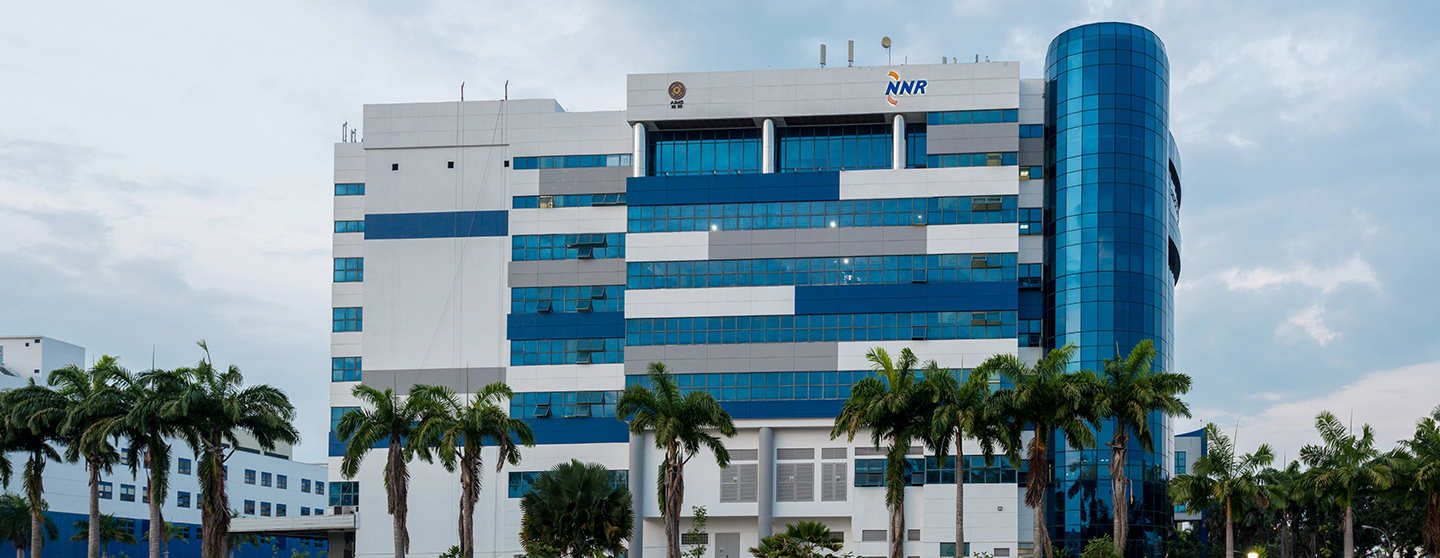
AIMS APAC REIT closed FY2026 with distribution per unit climbing 2.6% to 9.850 Singapore cents and net asset value per unit stepping from S$1.23 to S$1.28, but the cleaner read on the manager's year is the geometry of the four moves underneath: an opportunistic pre-funding of S$250 million in perpetual securities at 4.10% and 4.25% ahead of the US-Iran conflict to refinance the S$250 million 5.375% perpetual due in September 2026; a portfolio rejuvenation cycle that crystallised AEI completions at 15 Tai Seng Drive and 7 Clementi Loop, the acquisition of 2 Aljunied Avenue 1 in November 2025, and divestments of 3 Toh Tuck Link and 8 Senoko South Road at 32.5% and 11.1% premiums to valuation respectively; an aggregate leverage step-down from 28.9% to 26.8% on a 5.9% portfolio valuation uplift to S$2.25 billion; and the NSW Government Investment Delivery Authority's endorsement of Macquarie Park and Bella Vista — two of AAREIT's three Australian assets — among fifteen data centre projects worth A$51.9 billion alongside Microsoft, NEXTDC, Goodman and Stockland-owned sites.
Headline beat with NPI growth outpacing revenue
FY2026 gross revenue rose 2.2% year-on-year to S$190.7 million, but net property income grew faster at +5.7% to S$141.3 million — a 350 basis point spread between the top-line and operating-income trajectories that is the cleanest single-number signal of cost discipline in the print. The manager attributes the NPI margin expansion to lower property expenses, specifically lower electricity costs and broader cost efficiencies across the Singapore portfolio. Distributions to Unitholders rose 3.1% to S$80.6 million on a unit base that grew just 0.5% to 820.6 million — the residual lift to DPU.
Portfolio occupancy held flat at 93.6% on a year-on-year basis, with committed leases pushing the figure to 96.8% — a 3.8 percentage point premium over the JTC national average of 88.9% as at March 2026. The Singapore portfolio printed 95.9% occupancy versus 94.6% three months earlier, with logistics and warehouse at 96.3%, business parks at 95.4%, industrial at 91.8% and hi-tech at a near-full 99.8%. Australia held at 92.4% blended, dragged by Boardriders at 100.0% offset against blended business park stat. Weighted average lease expiry compressed to 4.0 years from 4.4 years a year earlier — a function of natural lease shortening on existing tenancies, partially offset by new fifteen-year and ten-year master leases signed at 7 Clementi Loop and 15 Tai Seng Drive following the AEI completions.
Rental reversion came in at +7.7% across 98 leases signed during the year, totalling 2.3 million square feet (27.4% of portfolio NLA). The headline reversion compares against a +20.0% print in FY2025 — the manager is normalising back toward a steady-state spread after three years of outsized post-pandemic mark-to-market on legacy lease expiries. The Singapore quarterly trajectory tells the underlying story: 1Q FY2026 +5.4% / 2Q +14.3% / 3Q +8.5% / 4Q +6.8%. Logistics & warehouse led the year at +9.8%, hi-tech printed +11.7% on a single large corporate lease renewal, industrial averaged +3.5%, and business park at +0.7% — the spread between sub-sectors mirrors the underlying tenant covenant strength rather than any structural softness in any particular market segment.
The perpetual pre-funding — S$250M at 4.10% / 4.25% before the US-Iran conflict
The most consequential capital decision of FY2026 was completed in two tranches in 4Q FY2026. On 21 January 2026, AAREIT issued S$150 million 5-year subordinated perpetual securities at a distribution rate of 4.10%. On 9 March 2026, the manager followed with S$100 million 5.5-year subordinated perpetual securities at 4.25%. The combined S$250 million net proceeds are earmarked to redeem the existing S$250 million 5.375% subordinated perpetual securities due for first call in September 2026. The geometry to read closely is the spread between the issuance rates and the redemption rate.
At 4.10% on the larger tranche and 4.25% on the smaller, the blended cost of the new perpetuals lands at approximately 4.16%. Against the 5.375% rate on the maturing securities, the spread saving is approximately 121 basis points on the S$250 million principal — equivalent to roughly S$3.0 million per annum in distribution-on-perpetual savings, before any consideration of the differential treatment of perpetual distributions versus senior debt interest in the ICR calculation. CEO Russell Ng's framing in the press release was that the issuance was "opportunistic" and timed before the commencement of the US-Iran conflict — a reference that suggests the manager judged geopolitical risk was elevated and locked in funding cost certainty before any potential repricing in the SGD perpetual market.
The structural read: AAREIT's blended debt funding cost stepped down to 4.1% as at 31 March 2026 from 4.3% a year earlier, but the perpetual refinancing will not flow through to the FY2027 cost line until the September 2026 redemption is executed. The 121 basis point spread save will be a tailwind to FY2027 distributable income that is not yet reflected in the FY2026 print. Combined with the launch of a Distribution Reinvestment Plan effective 4Q FY2026 — applied to the 2.600 cents per unit distribution for the period 1 January to 31 March 2026, with payment date 29 June 2026 — the manager has layered two distinct mechanisms for strengthening the balance sheet ahead of the redemption window: lower coupon on the replacement perpetuals, and the option for unitholders to take distributions in scrip during the bridging period.
NSW Government data centre endorsement — the strategic optionality move
On 20 April 2026, the NSW Government Investment Delivery Authority published its first round of data centre endorsements: fifteen projects with a combined committed value of A$51.9 billion, selected from a pool of A$92.6 billion in proposals reviewed. The IDA declined to endorse A$40.7 billion of submissions deemed premature or speculative. Two of the fifteen endorsed projects are AAREIT-owned assets — Optus Centre at 1-5 Lyonpark Road, Macquarie Park, and Woolworths Headquarters at 1 Woolworths Way, Bella Vista. The endorsement places AAREIT's Australian portfolio alongside Microsoft, NEXTDC, Goodman and Stockland-owned sites in NSW's strategic data centre pipeline.
The endorsement does not, by itself, commit either site to data centre conversion. What it does is two things. First, it validates the strategic location and infrastructure attributes of the two business park assets — proximity to energy infrastructure, established precinct connectivity, and submarine cable connectivity to Asia and the United States, layered with Australia's Five Eyes security status. Second, it establishes a credible alternative-use redevelopment pathway that supports the underlying valuation of both assets independent of their existing tenant covenants. Optus Centre is on a long master lease to Optus through to 2033 (49% AAREIT interest, S$260 million 49% slice value at March 2026); Woolworths HQ is on a ten-year master lease running through 2031 (100% interest, S$332.5 million March 2026 value). The endorsed status carries forward through the master lease window — meaning that any conversion or redevelopment work would be staged for after lease expiry rather than during.
The NSW IDA also concurrently endorsed A$34 billion in renewable energy projects to address the power supply constraints that are the binding bottleneck on Australian data centre development. The geometry behind the endorsement: NSW data centre investment has been growing at approximately 65% per annum over the prior three years, and accelerating cloud computing, AI infrastructure and digital connectivity demand has tightened the constraints. The manager's stated three-lever data centre strategy — maximising redevelopment optionality on existing assets, targeted acquisition of land-rich industrial and business park assets near energy infrastructure, and joint venture or co-development partnerships with institutional data centre operators — frames the endorsement as the entry point rather than the destination. Any actual data centre conversion or partnership transaction is post-FY2027 in timing if it materialises at all.
Portfolio rejuvenation — two AEIs, one acquisition, two divestments
FY2026 was the most active portfolio rejuvenation year in AAREIT's recent history. Two asset enhancement initiatives completed during the year. At 15 Tai Seng Drive — a five-storey industrial building in the Tai Seng cluster — the manager executed a full repositioning that secured a ten-year lease with an advanced manufacturing anchor tenant for one-third of the building. Valuation stepped from S$33.5 million at 31 March 2025 to S$38.0 million at 31 March 2026, a 13.4% uplift. At 7 Clementi Loop — a two-storey warehouse with global storage tenancy — the manager completed a comprehensive refurbishment to meet GreenMark Gold certification standards and the requirements of a master tenant on a new fifteen-year lease. Valuation rose dramatically from S$21.6 million to S$39.5 million — an 82.9% uplift reflecting both the AEI capital deployment and the master lease conversion that crystallised once the asset was repositioned.
The acquisition of 2 Aljunied Avenue 1 — known as the Framework Building — completed in November 2025 at a valuation of S$61.6 million as at 31 March 2026. The asset is a city-fringe industrial building with repositioning potential targeted at advanced manufacturing, life sciences and high technology tenants. The strategic logic is occupational: city-fringe industrial supply is structurally constrained in Singapore as JTC continues to consolidate industrial land toward Tuas and Jurong precincts, leaving city-fringe stock with scarcity premium for tenants requiring proximity to talent pools and CBD-adjacent operations.
On the disposal side, AAREIT completed two divestments at meaningful premiums to valuation. 3 Toh Tuck Link — a multi-tenanted logistics asset acquired in January 2010 — was divested at a sale price of S$24.4 million during FY2026, representing a 32.5% premium to the most recent independent valuation. 8 Senoko South Road — an industrial asset on a master lease — completed divestment on 16 April 2026 (post-balance-sheet) at a sale price of S$15.0 million, an 11.1% premium to the 31 March 2026 valuation of S$13.5 million carried at agreed sale price. Both transactions exemplify the manager's stated capital recycling strategy: monetise mature, sub-scale assets where market clearing prices exceed independent valuations, and redeploy proceeds into higher-quality city-fringe or AEI-eligible stock.
Balance sheet — leverage steps down on valuation uplift, debt headroom expands
Aggregate leverage stepped down from 28.9% as at 31 March 2025 to 26.8% as at 31 March 2026 — a 210 basis point reduction. The mechanic was a combination of higher total assets (S$2,290.6 million → S$2,464.0 million, +7.6%) driven by the 5.9% portfolio valuation uplift and the addition of 2 Aljunied Avenue 1, against modestly higher total liabilities (S$787.3 million → S$796.6 million, +1.2%). Net assets grew 10.9% to S$1,667.5 million. With aggregate leverage at 26.8% versus the MAS 50% gearing limit, AAREIT carries S$571 million of debt headroom at the cap — meaningful firepower for opportunistic acquisitions or AEI capital deployment without triggering equity issuance.
The interest coverage ratio printed at 2.7 times for FY2026 (FY2025: 2.4 times), or 4.9 times excluding distribution on perpetual securities (FY2025: 3.9 times). Both metrics improved year-on-year despite the larger total debt base, a function of higher trailing-twelve-months EBITDA from the operational growth and the favourable funding cost trajectory. Sensitivity reads: a 10% decline in EBITDA would compress ICR to 2.4 times, a 100 basis point increase in weighted-average interest rate would compress to 2.4 times — both still well above typical covenant thresholds. The weighted average debt maturity contracted to 2.2 years from 3.0 years, reflecting the shorter weighted-average tenure on the new perpetual securities and the natural shortening of existing facilities. The manager is in active discussions with both existing and new lenders to refinance the FY2027 debt maturities — S$275 million of total gross debt of S$570 million sits in the FY2027 maturity bucket.
On hedging, 80% of borrowings are on fixed rates as at 31 March 2026 (FY2025: 85% inclusive of forward interest rate swaps). Every 25 basis point increase in interest rates is estimated to have a 0.03 Singapore cent DPU impact per annum — a small absolute number on a 9.850 cent base. On foreign exchange, 69% of expected AUD distributable income is hedged into SGD on a rolling four-quarter basis via forward currency contracts, layered over a natural hedging strategy on the Australian asset financing.
Sustainability — all three SLL targets achieved, GRESB up for fifth consecutive year
AAREIT achieved all three Sustainability Performance Targets under its S$400 million and A$150 million Sustainability-Linked Loan facilities during FY2026: reducing Scope 2 carbon emissions, expanding solar capacity, and increasing the proportion of green leases with tenants. Solar capacity grew 40% from 11.05 megawatt-peak to 15.46 megawatt-peak through new deployments, including innovative cooling solutions such as solar-reflective cool paint at 27 Penjuru Lane and Water Efficiency Building (Basic) certification at 7 Clementi Loop. Carbon emissions reduced 31% versus the FY2020 baseline — progress toward the Science Based Targets initiative (SBTi)-aligned target of a 42% reduction by 2030.
The trust's GRESB score improved for the fifth consecutive year, from 63 to 66, and more than 60% of new and renewed leases were signed as green leases. AAREIT also conducted a refreshed double materiality assessment to define ESG priorities going forward, with 80% of the workforce having completed ESG training. The Audit, Risk and Compliance Committee oversight on climate-related risks was enhanced during the year. The structural read: the SLL framework is providing a contractual incentive structure that aligns the manager's ESG execution with debt-pricing outcomes, and the year-on-year track record on KPI achievement strengthens the manager's negotiating position on the next round of SLL facilities.
The Read
FY2026 sits as the closing chapter of a multi-year transformation since AIMS Financial Group's 2009 takeover. Total assets have grown 4.3 times from S$569 million in FY2008 to S$2,464 million in FY2026, with NPI growing 5.6 times from S$25 million to S$141 million over the same window. Total returns since the 2009 takeover sit at 720% — outperforming the Straits Times Index at 404% and the FTSE ST REIT Index at 396% by approximately 320 percentage points each. The trajectory has been built through a disciplined cycle of third-party acquisitions and organic growth, layered with active asset enhancement and master lease conversions on selected assets.
What FY2026 establishes is that the four-pillar strategy — proactive asset management, strategic acquisitions, prudent capital management and ESG leadership — continues to compound. CEO Russell Ng's framing in the results call positions the year as one of disciplined execution: two AEIs that crystallised long-tenor master leases, an accretive acquisition with embedded repositioning value, two divestments at premiums that monetised mature assets, and S$250 million of perpetual pre-funding that will lower forward distribution-on-perpetual cost. Chairman George Wang's framing positions the data centre optionality as a structural growth pathway: the NSW IDA endorsement validates the strategic location of the Australian assets and provides a credible pathway into a sector where demand is being driven by exponential growth in cloud computing, AI infrastructure and digital connectivity.
What the year does not yet resolve is the FY2027 refinancing on S$275 million of debt and the September 2026 redemption of the existing S$250 million 5.375% perpetual securities. The manager has pre-funded the perpetual leg at favourable rates, and active discussions with lenders on the senior debt leg are underway. Successful execution on both fronts through the second half of calendar 2026 would lock in the cost-of-capital improvement that flows through to FY2027 DPU, and would hand the manager incremental optionality on the data centre conversion or partnership pathway when the master leases at Macquarie Park and Bella Vista approach their renewal windows in 2031 and beyond. The next two reporting periods — 1Q FY2027 and 1H FY2027 — will start to define how that optionality crystallises.