US$17.25M Atlanta Hotel Sale Lands 8.7% Below Book — Yet Lifts Pro Forma DPS ~12% as Loss-Making Assets Exit
Acrophyte Hospitality Trust has agreed to divest two underperforming suburban-Atlanta hotels — Hyatt Place Alpharetta Windward Parkway and Hyatt Place Norcross Peachtree Corners — to Viator Hotels for an aggregate US$17.25 million, an 8.7% discount to…
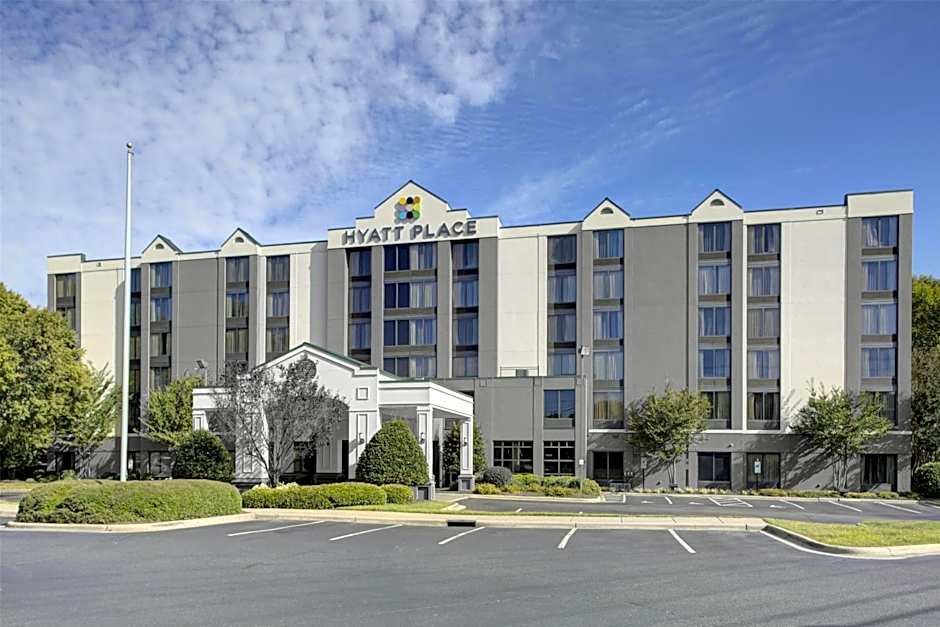
Acrophyte Hospitality Trust has agreed to divest two underperforming suburban-Atlanta hotels — Hyatt Place Alpharetta Windward Parkway and Hyatt Place Norcross Peachtree Corners — to Viator Hotels for an aggregate US$17.25 million, an 8.7% discount to their 31 December 2025 book value. The pair carried a combined negative net property income and a looming ~US$7.7 million capital-expenditure bill, so the exit lifts pro forma distribution per stapled security by roughly 12% even as it crystallises a discount to book.
Acrophyte Hospitality Trust (ACRO-HT) — the Singapore Exchange-listed, US-focused hospitality stapled group formerly known as ARA US Hospitality Trust until its October 2024 rebrand — has entered into two conditional purchase and sale agreements (PSAs) to sell two of its Atlanta hotels. The agreements, signed on 25 June 2026 (US time) through indirect wholly-owned subsidiary ARA USH Chicago, LLC, transfer Hyatt Place Atlanta Alpharetta Windward Parkway (127 rooms, opened 1998) and Hyatt Place Atlanta Norcross Peachtree Corners (126 rooms, opened 1996) to Viator Hotels, or its designated purchaser.
The combined consideration is US$17.25 million — US$8.60 million for the Alpharetta property and US$8.65 million for Norcross — payable wholly in cash. That represents an 8.7% discount to the hotels’ aggregate independent valuation of US$18.90 million as at 31 December 2025, appraised by HVS Consulting and Valuation. The price equals 91% of 2025 year-end valuation, the floor permitted under Appendix 6 of the Monetary Authority of Singapore’s Code on Collective Investment Schemes. After roughly US$0.79 million of transaction costs — including a 0.5% divestment fee of about US$86,000 to the managers — net proceeds are estimated at US$16.46 million. Completion is expected in the fourth quarter of 2026.
Why a discount to book is still accretive
The headline reads like a loss — assets sold below their most recent valuation — but the structural read is the opposite. On the relative-figures test required for a disclosable transaction under the SGX Listing Manual, the two hotels’ combined net property income (NPI) was negative US$474,000. These were not low-margin assets; they were loss-making at the property line.
The picture compounds from there. The managers describe both hotels as non-core and underperforming: competitive-set revenue per available room (RevPAR) still sits 34% below 2019 levels in the Alpharetta submarket and 13% below in Norcross, and the pair’s gross operating profit (GOP) ranked in the bottom four of the ACRO-REIT portfolio. Both have also shed value outright since the pandemic — Alpharetta down 57% to US$9.4 million, Norcross down 26% to US$9.5 million.
Crucially, holding them would have demanded fresh capital. The two hotels faced a combined US$6.6 million of brand-required renovations next year plus around US$1.1 million of building and mechanical capital expenditure (capex) — roughly US$7.7 million in total, or nearly 40% of their 2025 year-end valuation. The managers characterise that spend as largely curing deferred maintenance and meeting franchise requirements, with little upside given weak market conditions, and therefore dilutive to distributable income.
Take that drag out and the distribution maths flips. On a pro forma basis — assuming the sale had completed on 1 January 2025 — distributable income rises from US$4.93 million to US$5.53 million, lifting distribution per stapled security (DPS) from 0.850 to 0.953 US cents, an increase of about 12%. Net asset value (NAV) per stapled security is essentially unchanged at US$0.69, since the assets were carried close to the sale price. In short, ACRO-HT is paying an 8.7% haircut to book to walk away from negative-NPI assets and a US$7.7 million capex obligation — and being paid in higher distributions for doing so.
Where the capital goes
The two hotels are among 26 properties in ACRO-HT’s portfolio pledged as security for term loans totalling US$249.5 million, so releasing them requires notice to the lending banks. The managers intend to recycle the net proceeds in the near term into capital expenditure for ongoing renovations across the remaining portfolio and general working capital, and will seek the lenders’ consent to waive a requirement to deposit the proceeds into a designated account and prepay the loans. Absent that waiver, the net proceeds would instead go toward partial loan repayment.
The PSAs are governed by Georgia law and carry terms customary for a US hotel sale: a US$100,000 deposit per property, a 60-day due-diligence window (extendable once by 15 days for the buyer’s lender appraisal), and franchise-consent mechanics with Hyatt Place Franchising. The buyer’s obligations are not conditional on financing.
The disclosable-transaction frame
Under Rule 1010 of the SGX Listing Manual, the divestment is a disclosable transaction. The relative figures are modest: the properties’ NAV is 4.7% of the trust’s, their NPI is −1.3% of portfolio NPI, and the consideration is 16.0% of ACRO-HT’s market capitalisation of about US$107.9 million (based on the 25 June 2026 weighted-average price of US$0.186 per stapled security). The trust’s remaining book, after this sale, comprises 29 upscale select-service hotels across 16 US states.
What to watch
This is portfolio pruning of the cleanest kind — clearing sub-scale, post-pandemic-impaired, capital-hungry assets at the regulatory price floor to a buyer with a strategic local interest, in a thin transaction market the managers themselves call a “rare opportunity.” The accretion is real but mechanical: it comes from removing a loss-maker, not from redeploying the proceeds. The leading indicator from here is whether the recycled capital — into renovations on the remaining 29 hotels, or into paying down the US$249.5 million loan book — translates into durable distribution support rather than a one-off optical lift.