MPACT FY2025/26: S$406.8M of Divestments Re-Anchor the Portfolio on Singapore (66% of NPI), Leverage Eased to 36.5% — Reported DPU 7.97 Cents, 8.11 Underlying
Mapletree Pan Asia Commercial Trust used FY2025/26 to deliberately reshape its portfolio: three non-core divestments totalling S$406.8 million, debt pared down, and the book re-anchored on Singapore, which now contributes 66% of net property income and 61%…
Mapletree Pan Asia Commercial Trust (SGX:N2IU) used FY2025/26 to deliberately reshape its portfolio — completing three non-core divestments totalling S$406.8 million, paring down debt, and re-anchoring the book on Singapore, which now contributes 66% of net property income and 61% of assets under management. Reported distribution per unit slipped 0.6% to 7.97 cents, but that figure carries a one-off S$8.3 million divestment-related tax on the Festival Walk office tower sale; on an underlying basis, DPU rose 1.1% to 8.11 cents.
The headline P&L reads soft because the divestments shrank the asset base: gross revenue fell 4.6% to S$867.3 million and net property income fell 4.3% to S$654.4 million. But the comparable Singapore picture moved the other way — gross revenue up 2.3% and NPI up 4.1% — and the amount available for distribution held nearly flat at S$421.4 million. The portfolio now comprises 15 commercial properties across five gateway markets (four in Singapore, one in Hong Kong, two in China, seven in Japan, one in South Korea), 10.2 million square feet valued at S$15.2 billion. Net asset value per unit closed at S$1.73, and total return since the 2011 IPO stands at 190.4%.
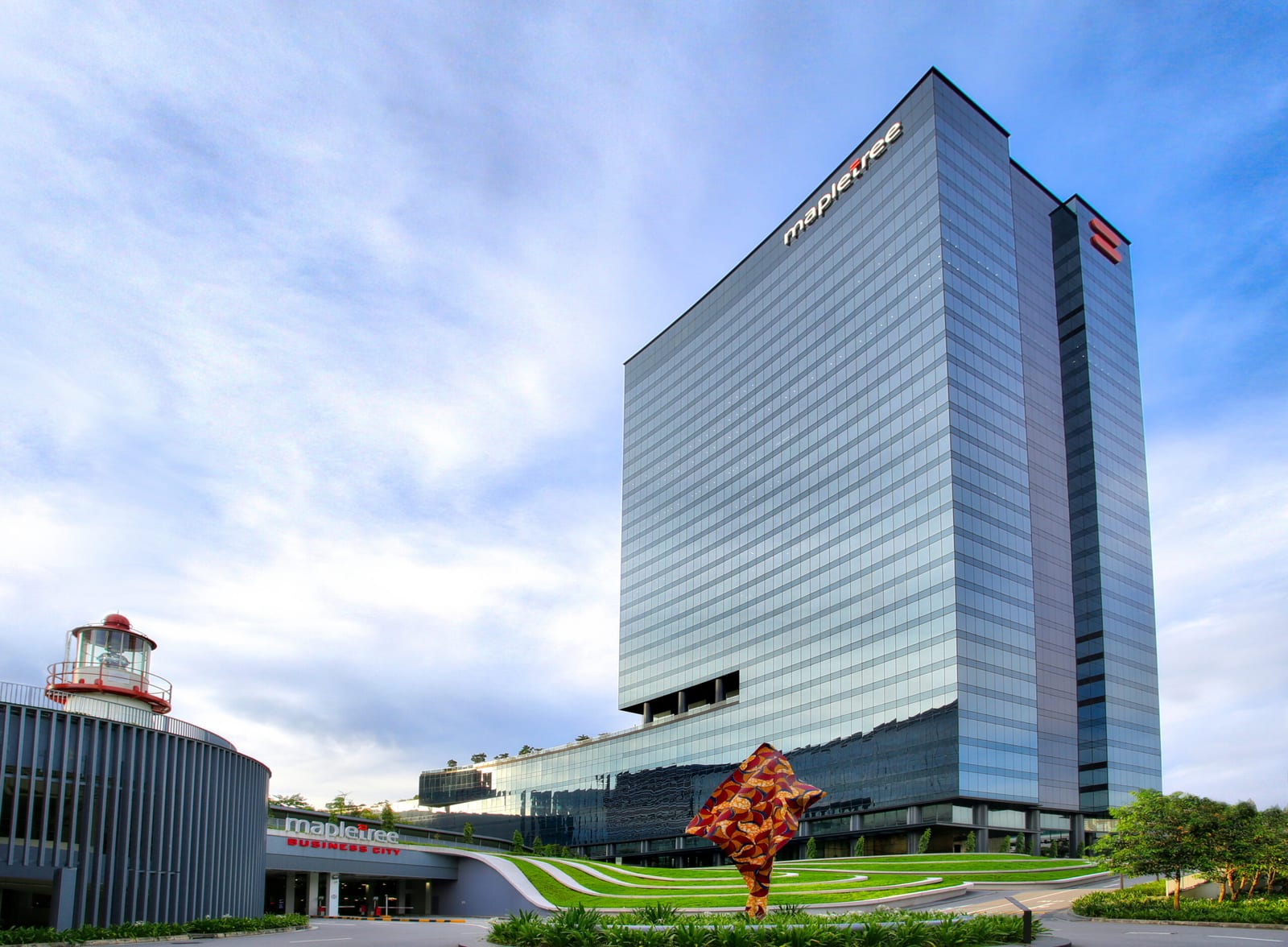
Singapore did the heavy lifting. VivoCity outperformed on every metric: gross revenue up 4.6% to S$253.2 million and NPI up 7.6% to S$190.0 million, with tenant sales up 3.7% to S$1.1 billion, shopper traffic up 3.6% to 45.4 million, and committed occupancy of 99.7%. The two-phase Basement 2 asset enhancement was completed in full, delivering over 10% return on investment, and renewals during the year were struck at a 14.1% rental uplift. Mapletree Business City — MPACT’s core integrated office and business-park asset — lifted committed occupancy to 96.4% from 91.2% a year earlier, securing renewals with three of the trust’s top-ten tenants; revenue was marginally lower (−0.4%) and NPI essentially flat (+0.1%), with rental reversion of −1.8% reflecting the Manager’s stated choice to prioritise retention over headline rents. The other Singapore properties (mTower and Bank of America HarbourFront) grew NPI 6.3% to S$56.8 million on a comparable basis.
The overseas read is genuinely softer, and that is the honest tension in the result. Following the divestment of its office tower in February 2026, Festival Walk is now a pure retail asset; on a like-for-like retail basis it posted gross revenue of S$167.6 million (−8.1%) and NPI of S$123.8 million (−9.0%) amid short-term lease extensions and a stronger Singapore dollar, though committed occupancy held at 100% and a reconfiguration of 18,800 square feet of single-tenant space into a multi-concept F&B and lifestyle cluster — projected at close to 50% ROI — is underway. China was the weakest leg: combined NPI fell 13.7% to S$58.8 million, with rental reversions of −22.7% at Gateway Plaza (Beijing) and −18.0% at Sandhill Plaza (Shanghai); both nonetheless out-occupied their submarkets, and Gateway secured an early renewal with a top-ten tenant extending its lease to 2031, albeit at a mid-teens rent cut. Japan now comprises seven freehold offices after the TS Ikebukuro and ABAS Shin-Yokohama divestments; committed occupancy was 75.1% at year-end but steps down to 57.1% after the expiry of Fujitsu’s single-tenant lease at the Fujitsu Makuhari Building on 31 March 2026 — a known post-period overhang the Manager flags directly. South Korea was the bright spot overseas: The Pinnacle Gangnam (50% interest) grew NPI 8.1% with a +51.3% rental reversion and 99.9% occupancy.
The balance-sheet repair is the clearest win. Aggregate leverage eased to 36.5% from 37.7% a year earlier and 40.5% two years ago; interest coverage strengthened to 3.2x; the weighted-average all-in cost of debt fell 35 basis points to 3.16%; 75.1% of debt is fixed; and average term to maturity is 3.0 years. The three divestments — TS Ikebukuro and ABAS Shin-Yokohama (S$78.7 million combined, August 2025) and the Festival Walk office tower (S$328.1 million, February 2026) — funded the deleveraging and removed single-tenant concentration and Greater China office exposure.
The read. This is a REIT trading a marginally softer headline DPU for a stronger, simpler, more Singapore-weighted book. The underlying 8.11-cent DPU and the four-point leverage reduction over two years are the substantive numbers; the reported 7.97 cents is a one-off tax artefact. The watch items are the overseas drag — whether China reversions stabilise and how quickly the Makuhari vacancy (Fujitsu’s FJM exit) is back-filled — against a Singapore core that keeps compounding. Unitholders vote at the 15th AGM on 29 July 2026, where the agenda includes renewal of the unit buy-back mandate (up to 5% of units) and the general issuance mandate; on FY2025/26 audited figures, a full 5% buy-back would lift adjusted NAV per unit modestly to S$1.75 while nudging aggregate leverage to 38.8%.