Frasers Property 1H FY26: Attributable Profit Drops 37.8% To S$88.4m On A S$38.2m Thailand Impairment, But Stripping The 1H FY25 Tax Reversal Reveals 77% Underlying Growth As Leverage Climbs To 94.2%
Frasers Property Limited released 1H FY26 results on 8 May 2026, headlined by a S$88.4m attributable profit that printed 37.8% below the prior corresponding half
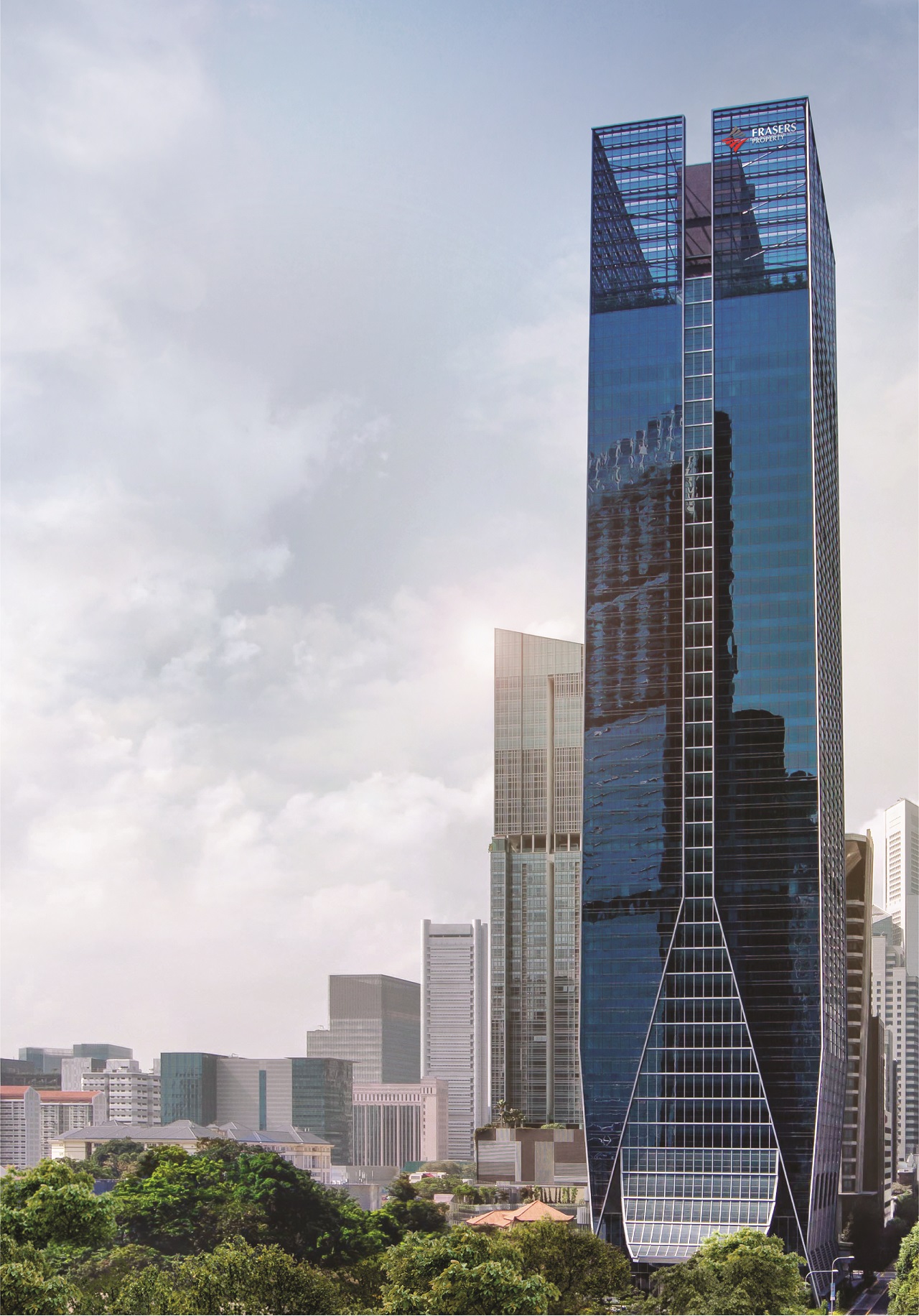
Frasers Property Limited released 1H FY26 results on 8 May 2026, headlined by a S$88.4m attributable profit that printed 37.8% below the prior corresponding half — a number that on its face reads as a sharp deterioration, but which on closer reading tells almost the opposite story. Stripping the one-off reversal of tax provisions that flattered 1H FY25, underlying attributable profit was 77% higher year-on-year. PBIT rose 13.2% to S$678.7m, EBITDA +12.7% to S$719.6m, recurring income still accounted for 76% of PBIT, and net asset value per share ticked up to S$2.40 (FY25: S$2.37). But net debt to total equity climbed 5.0 percentage points to 94.2% and net debt to property assets to 45.5% — the highest leverage reading in the recent cycle. The board declined to declare an interim dividend, citing the "uncertain business environment." Shares closed Friday at S$1.11, down 2.6% or S$0.03 on the release. The gap between the headline -37.8% and the underlying +77% is the entire story.
What was reported
Revenue fell 5.2% to S$1,508.6m, almost entirely on the absence of contribution from Sky Eden@Bedok following its temporary occupation permit in September 2025. EBITDA rose 12.7% to S$719.6m. PBIT rose 13.2% to S$678.7m. Attributable profit before fair value change and exceptional items (APBFE) edged up just 1.0% to S$138.1m — moderated by the 1H FY25 tax provision reversal benchmark. Net fair value movement was -S$8.1m (vs +S$6.4m), mainly reflecting fair value losses on I&L assets in Europe. Exceptional items came in at -S$41.6m versus -S$0.9m the prior half — almost entirely the Thailand impairment. Attributable profit landed at S$88.4m, down 37.8%, with basic earnings per share after fair value and exceptional items at 2.0 Singapore cents (1H FY25: 3.5 cents).
The PBIT line itself was driven by higher share of results from joint ventures and associates, residential settlements across Singapore, Australia and China, industrial estate land sales in Thailand, non-core land sales in Australia, and a higher retail contribution from Singapore reflecting the May 2025 step-up of FCT's interest in Northpoint City South Wing to 100%. Strip both the 1H FY25 tax reversal benchmark and the 1H FY26 Thailand impairment, and the underlying operating performance is meaningfully ahead of last year on every line.
Singapore: retail compounding, development trough
Singapore PBIT rose 3.0% to S$233.5m on retail strength. Retail PBIT lifted 12.7% to S$176.9m, with two distinct drivers. First, the full-period contribution from Northpoint City South Wing — FCT acquired the remaining 100% interest in May 2025, so 1H FY26 is the first half that captures the full economic uplift. Second, better operational performance across the broader suburban portfolio: occupancy improved, positive rental reversion was achieved against a 3.1% year-on-year tenant sales growth backdrop, and trade-mix enhancements at several malls supported footfall. The two ongoing asset enhancement initiatives are tracking — Hougang Mall is 88% committed and on schedule for September 2026 completion; NEX AEI commences May 2026 with 40% Phase 1 pre-leasing already secured.
Singapore commercial PBIT lifted 14.2% to S$18.5m on positive rental reversion across the portfolio. Singapore development PBIT, however, fell 40.6% to S$20.5m — almost entirely the Sky Eden@Bedok absence after its September 2025 TOP, partially offset by share-of-results from The Orie. The development trough is a feature of the cycle, not a defect: Dunearn House (380 units, target launch 2H 2026) and the newly-awarded Kallang Close GLS site (April 2026) are the next two pipeline anchors. Unrecognised Singapore residential revenue stands at S$0.4b across 942 contracts on hand. Group CEO Panote Sirivadhanabhakdi, speaking at the earnings briefing on Friday 9 May, said the group "remains disciplined on land pricing" and reiterated the view that Singapore residential prices "can continue to grow in a measured way." Cooling measures, while a constraint, "help protect the market from a real estate bubble."
Industrial: lifted by land sales, anchored by leasing
Industrial PBIT rose 14.0% to S$230.2m. The non-REIT line lifted 32.9% to S$65.4m on non-core land sales in Australia and contributions from newly completed properties in AU and the EU, partially offset by reduced contributions from assets partially divested into capital partnerships in April and October 2025. The REIT line lifted 6.0% to S$151.1m on higher occupancies, positive rental reversions and contracted escalations across I&L assets in AU and the EU, partially offset by the absence of 357 Collins Street post-September 2025 divestment. Fee income lifted 35.6% to S$13.7m on new capital partnerships.
Australia PBIT swung dramatically to S$34.6m from S$7.5m in 1H FY25 — nearly five times the prior base. The lift is residential settlements and the final land site sale at Discovery Point in NSW. Mambourin Retail in Victoria made its maiden contribution from a September 2025 completion, while Rhodes Quarter held steady through targeted leasing initiatives. The build-to-core pipeline across AU/EU/VN/TH totals approximately 1.07 million sqm, with about 33,000 sqm delivered in 1H FY26 and Vietnam alone carrying ~557,900 sqm of planned FY26-and-beyond completions.
Thailand & Vietnam: land sales mask a S$38.2m impairment
Thailand & Vietnam PBIT rose 44.3% to S$102.6m — the standout segmental line of the deck. The driver is almost entirely share-of-gains from industrial estate land sales at the ARAYA Eastern Gateway project, which more than offset lower residential settlements. Vietnam added S$5.3m on a full-period contribution from I&L facilities that commenced operations in FY25, supported by sustained FDI inflows and the government's continued transportation infrastructure investment.
But the headline drag on the entire FPL result was Thailand-sourced: a S$38.2m impairment on an unspecified investment, booked through exceptional items. The deck does not name the asset. Across the group, exceptional items totalled -S$41.6m in 1H FY26 (1H FY25: -S$0.9m) — almost entirely this impairment. Without it, attributable profit would have been ~S$127m, much closer to (and arguably above on an underlying basis) the prior half.
Operationally, Thailand is consolidating. FPT and One Bangkok teams have been operationally integrated into what FPL now describes as "Thailand's largest multi-asset real estate player." The integration adds the One Bangkok premium commercial mixed-use portfolio alongside FPT's I&L scale (S$3.7b warehouse and factory AUM) and creates a single platform spanning industrial, commercial, retail and hospitality. The GELEX Infrastructure JV in Vietnam was deepened in 1H FY26 into a new investment vehicle targeting Vietnamese residential growth — a meaningful expansion of FPL's Vietnam optionality beyond the existing I&L pipeline.
Others: China up, UK down on impairment
China PBIT rose 1.9% to S$69.8m on higher residential settlements from JV project completions. The 1H FY26 contributors were Juyuan Upview (effective interest 34%) and Xuhang Upland (effective interest 34%); 1H FY25 had been carried by Upview Hongqiao (effective interest 25%). Fang Song, the premium 194-unit Shanghai development at 51% effective interest, sold 69% of its 159-unit second-batch launch on 29 January 2026 — supporting forward visibility despite a still-soft Tier 1 residential backdrop.
UK PBIT dropped 77.8% to S$5.7m. The drop reflects an impairment recognised on a UK commercial property plus lower contributions following the November 2025 divestment of Chineham Park in Basingstoke, sold for approximately £89.7m (S$154m). Active leasing on the remaining business park portfolio (~389,000 sqm across six assets serving 294 tenants) is offsetting, but only partially.
The leverage line is the variable to watch
The most material data point in the deck is not in the PBIT bridge. It is in the balance sheet metrics. Net debt to total equity (which includes non-controlling interests and perpetual securities) moved from 89.2% at FY25 close to 94.2% at 31 March 2026 — a 5.0 percentage point swing in six months. Net debt to property assets moved from 43.7% to 45.5%. The group attributes both moves primarily to the January 2026 redemption of perpetual securities (which mechanically lifts the net debt line versus equity) plus capital expenditure deployed in Australia, the EU and Thailand. Partially offset by the Chineham Park UK divestment and entry into Australian capital partnerships.
The supporting capital management metrics held up but moved in subtle directions: fixed-rate debt (including hedged) slipped to 69.4% from 75.0%, weighted average debt maturity held at 2.5 years, and blended cost of debt eased to 3.8% p.a. from 4.0%. Cash and deposits at S$2.0b sit against S$1.5b of FY26 debt maturities — manageable, with the group stating it is "well-positioned to repay and/or refinance" the near-dated stack.
The board's decision not to declare an interim dividend — explicitly attributed to the "uncertain business environment" — is the most direct signal of how management is reading the next two reporting periods. FPL does not historically pay interim dividends as a matter of policy (the first and final FY25 dividend was 4.5 Singapore cents, in line with FY24), so the non-declaration is consistent with pattern; but the board's explicit framing this half is a tonal signal. The wider context in the deck's risk-positioning slide explicitly flags the Iran war's energy disruptions and trade frictions, alongside interest rate and currency volatility as headline external pressures.
Capital recycling pace is materially slower
Total capital recycling in 1H FY26 was S$424m, broken down as S$245m via capital partnerships, S$161m via third-party sales, and S$18m via the group's listed REITs (the six I&L property divestment from FPT to FTREIT). The full-year FY25 number was S$1,378m. The full-year FY24 number was S$1,392m. On a run-rate basis, FY26 is tracking around S$850m — roughly 60% of the prior-year pace.
The composition is also revealing. Of the S$424m, only S$18m flowed via the group's listed REITs. Compare against FY25, where S$625m of S$1,378m moved through the REITs (FCT's S$567m Northpoint City South Wing acquisition being the dominant transaction). The strategic REIT platform — historically FPL's largest recycling channel — is essentially quiet in 1H FY26. The recycling load has shifted to capital partnerships and direct third-party sales.
For a balance sheet running net debt/equity above 94%, this matters. The Centrepoint collective sale award (tender awarded February 2026 to FPL for S$391.9m on the rear plot, 6.2% below the S$418m guide price, at an effective land rate of S$2,577 psf ppr after lease buy-back charge) is the most material near-term unlock event in the pipeline — and crucially, it is conditional on either an MCST Plan No. 1304 sale order being granted or all subsidiary proprietors consenting to the collective sale. That conditionality is the gating risk on the most concrete value-unlock in the deck. Asked at the briefing whether FPL has firm redevelopment plans, Panote said the group is "still studying various options to rejuvenate The Centrepoint," with operations at the Orchard Road mall remaining unchanged for now.
Two completed Australian divestments in April 2026 — Brunswick & Co (the group's first built-to-rent development, in Queensland) and Burwood Brickworks Shopping Centre (Victoria) — sit outside the 1H FY26 reporting window but will book in 2H. Both are positive for the recycling line and for managing the leverage trajectory into year-end.
The 9 May Singapore EC policy update — early to assess impact
The Singapore Government on the morning of 9 May 2026 — the day after FPL's results release and the same day as the earnings briefing — announced a tightening of executive condominium (EC) rules. The minimum occupation period for ECs will be extended from five to 10 years before owners can sell their units. The deferred payment scheme for new EC projects will be scrapped. The required quota of new units reserved for first-time buyers will be raised from 70 to 90%, and the priority period for first-timers extended significantly from one month to two years.
Group Chief Financial Officer Loo Choo Leong, asked at the briefing whether the changes affect FPL's residential pipeline, said it was "too early to assess their full impact." Loo added that FPL has "no EC stock at this point in time," but that the group "will monitor the broader market sentiment and study the impact of the measures." He also flagged that "there remains a pricing gap between EC sites and government land sale sites" — a structural feature of the EC segment that the new measures may recalibrate as developers reprice forward bids.
The direct read-across to FPL is minimal: no EC inventory, two private residential pipeline anchors (Dunearn House at Bukit Timah; Kallang Close GLS) both targeted at standard private residential rather than executive condominium product. The indirect read-across is on developer competitive intensity in forward GLS tenders, which the new EC measures may dampen.
Forward signals
The deck is most concrete on the value-unlock pipeline. Three Singapore residential pipeline anchors: Dunearn House — 380-unit development in the Bukit Timah Turf City masterplan corridor, target launch 2H 2026; Kallang Close GLS site — awarded April 2026, city-fringe waterfront location on the Kallang River; and The Centrepoint rear plot collective sale — leasehold rear plot acquired via collective sale tender (subject to MCST sale order), opens rejuvenation optionality on the broader Orchard asset.
Plus the secondary international pipeline: Round Mountain (Queensland, 2,000+ residential lots, launching May 2026); Goldina Ngamwongwan-Prachachuen (Thailand premium townhomes, target launch 2H 2026); Fang Song (Shanghai, 69% sold of latest tranche). Total residential unrecognised revenue: S$1.1b across approximately 2,770 contracts on hand. The build-to-core non-residential pipeline of ~1,000,000 sqm of development GFA and ~6,800,000 sqm of strategic land bank remains the longer-cycle anchor.
The Group Chief Operating Officer appointment effective 1 October 2026 — mentioned across multiple deck slides — is a structural signal: FPL is institutionalising execution depth at a moment when the operating platform is most complex (Thailand integration, GELEX JV, Singapore AEI cycle, value-unlock pipeline) and the capital structure has the least headroom it has had in the recent cycle.
The Read
Frasers Property's 1H FY26 result is the rare deck where the headline number and the underlying number tell almost opposite stories. The headline -37.8% attributable profit reflects a single S$38.2m Thailand impairment booked against a 1H FY25 base that was flattered by a one-off tax provision reversal. The underlying operating engine — measured by PBIT, EBITDA, recurring income share, and segmental momentum — is accelerating.
Five-asset-class diversification (industrial 36% of property AUM, retail 25%, commercial 17%, residential 12%, hospitality 10%) and four-geography concentration (Singapore 35%, Australia 28%, Europe 18%, Thailand 13%) are doing what they are designed to do: smoothing cyclical drags in any one segment against tailwinds elsewhere. Singapore retail is compounding under FCT, Australian industrial is monetising via land sales and capital partnerships, Thailand is consolidating its platform, Vietnam is ramping. The Centrepoint collective sale opens a redevelopment lane on a marquee Orchard asset, with Panote's "still studying various options" framing leaving optionality wide.
The leverage line, however, is the variable to watch. Net debt/equity above 94% with capex still flowing into Australia, the EU and Thailand, and with the strategic REIT recycling channel materially quieter than in FY24-25, places the entire capital-recycling burden on capital partnerships, third-party sales, and the conditional Centrepoint unlock. The board's explicit "uncertain business environment" framing on the no-interim-dividend call is the tonal signal that management is reading the same risk picture. The market's 2.6% share price drop on release day, to S$1.11, suggests investors are weighing the leverage trajectory more heavily than the underlying +77% lift. The discipline thesis lives or dies on that line.
The investment case: an integrated investor-developer-operator whose operating engine is accelerating under one-off noise, with five-asset-class diversification compounding through capital recycling, and leverage now the single most informative metric.
Watch the leverage line into 2H FY26 — that's where the discipline thesis lives or dies.