Prime US REIT 1Q2026: Occupancy 83.1% (4th Quarterly Gain), NPI +3.3% QoQ Ends 3-Quarter Descent — But The Real Story Is 463k sf Of Signed-But-Uncommenced Leases Ramping Rent From 3Q2026
Prime US REIT released its 1Q2026 Key Business & Operational Updates on 12 May 2026
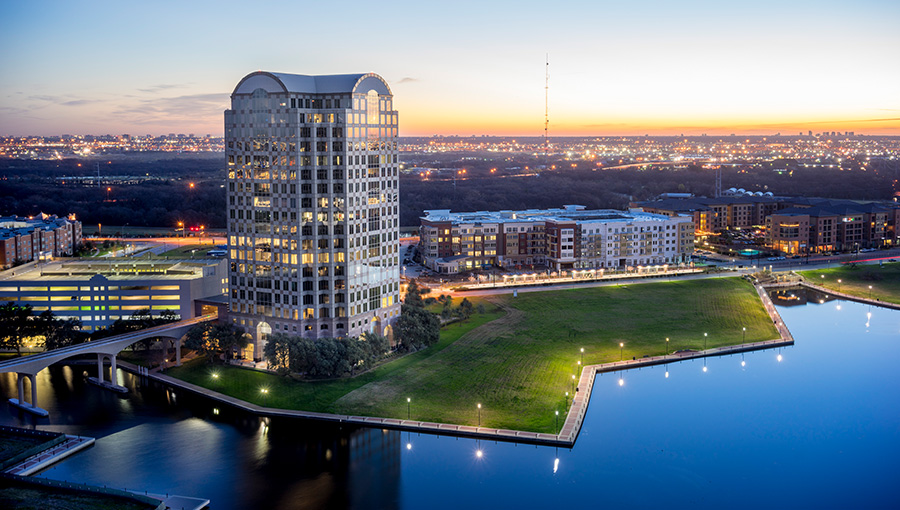
Prime US REIT released its 1Q2026 Key Business & Operational Updates on 12 May 2026 — a print that on the headlines reads as a steady operating quarter (occupancy +0.4pp, NPI +3.3% QoQ, leasing reversion +4.0%), and on closer reading is the most legible cashflow visibility statement the manager has put out since the payout-ratio normalisation was announced. The numbers that matter are not the ones in the headline. Committed occupancy of 83.1% at 31 March 2026 marks the fourth consecutive quarterly gain off the 78.9% trough recorded twelve months ago; net property income of US$17.2M is the first sequential uptick after three quarters of decline; and 463,000 square feet of leases — equivalent to ~11.0% of committed occupancy — are signed but not yet contributing rent, with staggered commencement scheduled from 3Q2026 onwards. This is the wedge that backed the manager's decision to raise the distribution payout ratio from 10% to 65% in 4Q2025, and the print supports the read that the underlying cashflow trajectory through 2026 and into 2027 is now contracted rather than projected.
Headline Operational and Financial Numbers
Committed portfolio occupancy 83.1% (31 December 2025: 82.7%; 31 March 2025: 78.9%). Four consecutive quarters of growth: 78.9% → 80.2% → 80.7% → 82.7% → 83.1%. 1Q2026 leasing volume 99,000 sq ft (2.4% of NLA); 4Q2025 was 188,000 sq ft. Rental reversion +4.0% (4Q2025: +1.5%). WALE 5.6 years, unchanged from 31 December 2025. Net property income US$17.2M (+3.3% QoQ from US$16.6M in 4Q2025; 1Q2025: US$17.7M). Distributable income US$6.5M (4Q2025: US$5.8M; 1Q2025: US$8.4M). Aggregate leverage 45.2% (unchanged QoQ). NAV per unit US$0.52; unit price US$0.171 at 31 March 2026 — a 67% discount to NAV. The 1Q2026 financials are unaudited.
1. The 463,000 sq ft of Committed-But-Uncommenced Leases Is The Story
The deck draws out one chart that, more than any other number in the release, defines the read on Prime US REIT through the rest of 2026 and into 2027. Of the 633,000 square feet of new leases signed in 2025-2026, only 170,000 square feet had commenced rental contribution as at 31 March 2026. The remaining 463,000 square feet — representing approximately 11.0% of committed occupancy — is staggered to begin paying rent from 3Q2026 onwards, after the standard 3-to-12 month gap between lease agreement signing and rent commencement (during which lessees take possession, complete tenant improvements, and consume the rent-free period).
The mechanical implication for cashflow is direct. A portfolio that today carries a committed occupancy of 83.1% but a rentally-contributing occupancy materially lower than that will, through 3Q2026 and into 2027, see the gap close. The income lift comes not from new leasing activity that has yet to be done, but from leases that have already been signed at agreed rents and are simply waiting out their TI and rent-free windows. This is the most concrete forward catalyst in the Singapore REIT space at the present moment — comparable in structure to the Linton Hall rent commencement scheduled at Digital Core REIT in December 2026, but at materially larger scale relative to portfolio size.
The decision to raise the payout ratio from the 10% level held from 2H2023 through 1H2025 to 50% for the July-October 2026 distribution period and to 65% from 6 October 2026 onwards was anchored against precisely this visibility. FY2025 DPU of 0.61 US cents — more than double the FY2024 figure of 0.29 US cents — is the first half of that normalisation showing up in cash. The 3Q2026 distributable income print will be the first quarter where the staggered rent commencement begins to flow through, and is the data point that will validate (or qualify) the manager's commitment to "at least 65%" going forward.
2. Net Property Income Has Turned The Corner
The five-quarter NPI trail tells the inflection story directly. 1Q2025 US$17.7M, 2Q2025 US$18.1M, 3Q2025 US$16.8M, 4Q2025 US$16.6M, 1Q2026 US$17.2M. The 1Q2026 print ends a three-quarter descent and registers +3.3% QoQ. In absolute terms the inflection is modest — US$0.6M above the 4Q2025 base — but the composition of the lift is more interesting than the magnitude. The deck attributes the improvement to "higher committed occupancy and rental contributions from new leases following the expiry of rent-free periods." Translation: this is the first quarter where some portion of the recently-signed lease cohort has rolled into cash, and the rate of roll-in increases from 3Q2026 as the 463k sf staggered commencement begins.
Two further compounding mechanics support the trajectory. First, annual rent escalations of 2% to 3% are built into nearly every lease in the portfolio — providing a contractual, embedded growth mechanism that compounds independently of leasing activity. Second, the +4.0% rental reversion on 1Q2026 leasing volume (versus +1.5% in 4Q2025) suggests the rates being captured on new signings are improving alongside the U.S. office market's broader rental recovery. The JLL 1Q2026 office market data referenced in the deck shows national gross leasing activity +7.6% YoY, the third consecutive quarter of meaningful positive net absorption, asking rents stable, and new deliveries falling sharply — a confluence of conditions that supports landlord pricing power for high-quality, well-located assets going into the back half of 2026.
3. The Portfolio Is Recovering Compositionally, Not As A Block
The asset-level occupancy table is where the recovery thesis is most usefully stress-tested. Village Center Station I in Greenwood Village, Denver moved from 63.0% at 31 December 2025 to 80.1% at 31 March 2026 — a 17.1 percentage point improvement, driven by the S&P Global 11-year lease for approximately 40,000 sq ft signed in late March. A 12,000 sq ft expansion is reported in the deck as being finalised, which would push the asset further. In the same quarter and at similar magnitude, Sorrento Towers in San Diego moved the other direction: 94.4% → 87.1% (-7.3pp). Tower I at Emeryville held flat at 51.9% — the lowest occupancy in the portfolio, sitting 21.1 percentage points below the 73.0% submarket occupancy that CoStar records for Emeryville as at 7 April 2026.
The portfolio's 83.1% committed occupancy is therefore a composite reading. Five assets outperform their submarkets (Village Center Station II at 100.0% vs 66.4% submarket; CrossPoint 94.7% vs 81.6%; Tower 909 93.5% vs 79.8%; 222 Main 89.6% vs 86.7%; Promenade I & II 84.6% vs 70.0%; Village Center Station I 80.1% vs 66.4%). Five assets currently underperform their submarkets (Sorrento Towers 87.1% vs 93.3%; Park Tower 89.2% vs 91.6%; The 101 75.9% vs 87.5%; Reston Square 69.0% vs 75.5%; 171 17th Street 65.2% vs 70.9%; Tower I Emeryville 51.9% vs 73.0%). The investment case requires the underperformers to close their submarket gaps while the outperformers do not give back gains — a less-stylised version of the recovery narrative than the headline occupancy number implies.
4. The 2028 Expiry Wall Sits Beneath The 5.6-Year WALE Headline
The lease expiry profile by NLA shows 5.2% expiring in 2026, 18.2% in 2027, and 29.0% in 2028 — with the 2028 stack being the largest single-year exposure across the entire profile. By cash rental income the equivalent percentages are 5.4%, 20.6%, and 26.5%. The 2028 cliff sits directly between the rent-ramp trajectory (which compounds through 2026-2027) and the longer-dated stability beyond 2034 (where 16.2% of NLA / 16.3% of CRI is scheduled).
The headline portfolio WALE of 5.6 years, and the top-10 tenant WALE of just 3.2 years, frame the same disclosure differently. The portfolio average WALE is supported by long-dated leases such as the recently-signed S&P Global 11-year tenancy and the Sacramento County District Attorney's Office 121,000 sq ft lease at Park Tower signed in December 2025. But the top-10 tenants — Charter Communications (10.4% of CRI at Village Center Station I + II), Dexcom (6.3% at Sorrento Towers), Holland & Hart (4.1% at 222 Main), Matheson Tri-Gas (4.0% at Tower 909), Wells Fargo (3.9% at 171 17th Street), Arnall Golden Gregory (3.9% at 171 17th Street), Goldman Sachs (3.1% at 222 Main), and the rest — collectively represent 42.4% of CRI on a WALE of 3.2 years. The renewal cycle on this cohort runs concurrent with the 2027-2028 expiry stack and is the principal operational watch for the manager through the cashflow ramp.
5. Capital Structure: 45.2% Gearing And A US$485M 2027 Maturity Wall
Aggregate leverage held at 45.2% as at 31 March 2026, with gross borrowings of US$657M against a debt headroom of US$139M computed to the 50% ceiling, and committed undrawn facilities of US$56M. The weighted average interest rate is 5.4% and the interest coverage ratio is 1.6x. The portfolio is 66% fixed or hedged: 50% until 2026, then 16% until 2029, with future hedge being managed dynamically per the deck disclosure.
The debt maturity profile on fully extended terms is concentrated. US$67M is due in 2026, US$485M in 2027, nil in 2028, and US$105M in 2029. The 2027 maturity wall is the principal capital structure event over the cashflow-ramp window. It coincides with the trajectory of NPI improvement (1Q2026 inflection → 463k sf staggered commencement from 3Q2026 → top-10 tenant WALE rolling through 2027-2028), but coincides also with the 2027 expiry stack of 18.2% NLA. The refinancing window is bounded — both in time and in terms of the operating evidence required to support an attractive coupon — and is the gating risk on the investment thesis. Unit price at US$0.171 against NAV per unit US$0.52 (67% discount) reflects this clustering of timing risks more than it reflects operational deterioration; NAV moved up not down through the quarter.
6. The U.S. Office Market Backdrop Has Stopped Working Against The Story
The JLL 1Q2026 office market data — quoted in detail through the deck's market section — describes an inflecting national backdrop. Gross leasing activity +7.6% YoY; third consecutive quarter of meaningful positive net absorption; investment sales activity +40% YoY (1Q2026 vs 1Q2025); deliveries falling to multi-decade lows; net inventory losses accelerating. Asking rents have stabilised at Overall US$39.64 per square foot and Trophy & Class A US$45.14 per square foot, both with marginal QoQ improvement. Overall vacancy 22.2%. The Sun Belt — where Prime US REIT has meaningful exposure through Salt Lake City, Dallas, San Antonio, Atlanta, and Sacramento — has recorded 1.5 million sq ft of occupancy gains in 1Q2026 and leasing volumes back to 95% of pre-pandemic levels.
On JLL's office rental clock, the cities where Prime US REIT holds assets sit in two zones. In the rising phase: Dallas, Atlanta, San Diego. In the bottoming phase: Sacramento, Denver, Philadelphia, Washington DC. San Francisco Bay (where Tower I at Emeryville sits at 51.9% occupancy) is at the bottom of the clock. The portfolio's exposure to "rising" and "bottoming" markets means the manager is not betting on a peak — it is positioned to capture the cyclical recovery as it lands, which on JLL's framing is now demonstrably underway.
Strategic Pillars And CEO Commentary
The deck closes with the manager's three stated pillars: drive occupancy (achieved at 83.1% with four quarters of growth and a contracted pipeline ramp), maintain quality of assets (capital discipline, tenant retention, property income growth), and enhance unitholder value (payout ratio at 65% from 4Q2025). Mr Rahul Rana, CEO of the Manager since 1 April 2024, framed the quarter as continuing the positive trajectory of 2025: NPI up meaningfully quarter-on-quarter, leasing pipeline active across multiple properties, recently-signed leases yet to commence rental contributions, and a staggered commencement ramp through 3Q2026 to 2027 that is expected to drive a step-up in cash property income.
Key Takeaway
The 1Q2026 print is a quarter of small absolute movements supported by the most legible forward catalyst Prime US REIT has put on record. Committed occupancy +0.4pp, NPI +US$0.6M QoQ, leasing volume 99k sf at +4.0% reversion — these are the headline numbers, and they print as steady. The structural read is different. 463,000 sq ft of leases are signed and will begin paying rent on a staggered basis from 3Q2026 onwards; this commitment, not the 1Q2026 headline, is what supports the 65% payout ratio and the trajectory through 2026-2027. The portfolio recovers compositionally — Denver and Sacramento driving the lift, San Francisco Bay and Atlanta still soft — and the 2028 expiry stack overlapping the 2027 US$485M maturity wall is the principal gating risk over the recovery window. At a 67% discount to NAV with NAV per unit moving up not down, the unit price reflects the timing-risk clustering more than it reflects the underlying portfolio direction. The 3Q2026 distributable income print is the first hard data point on which to mark progress against the manager's contracted-cashflow narrative.