NTT DC REIT FY25/26 Maiden Reading: Portfolio Independently Valued At US$1,670.2M (+11.3%) — Six Properties, US$170M Revaluation Gain, And A 23% SG1 MSA Reversion That Priced Above The Singapore Market Band
Ten months after listing as Singapore's first global data centre REIT, NTT DC REIT has delivered its maiden full-year reading — and the more telling number sits in a separate SGX filing dated the same day.
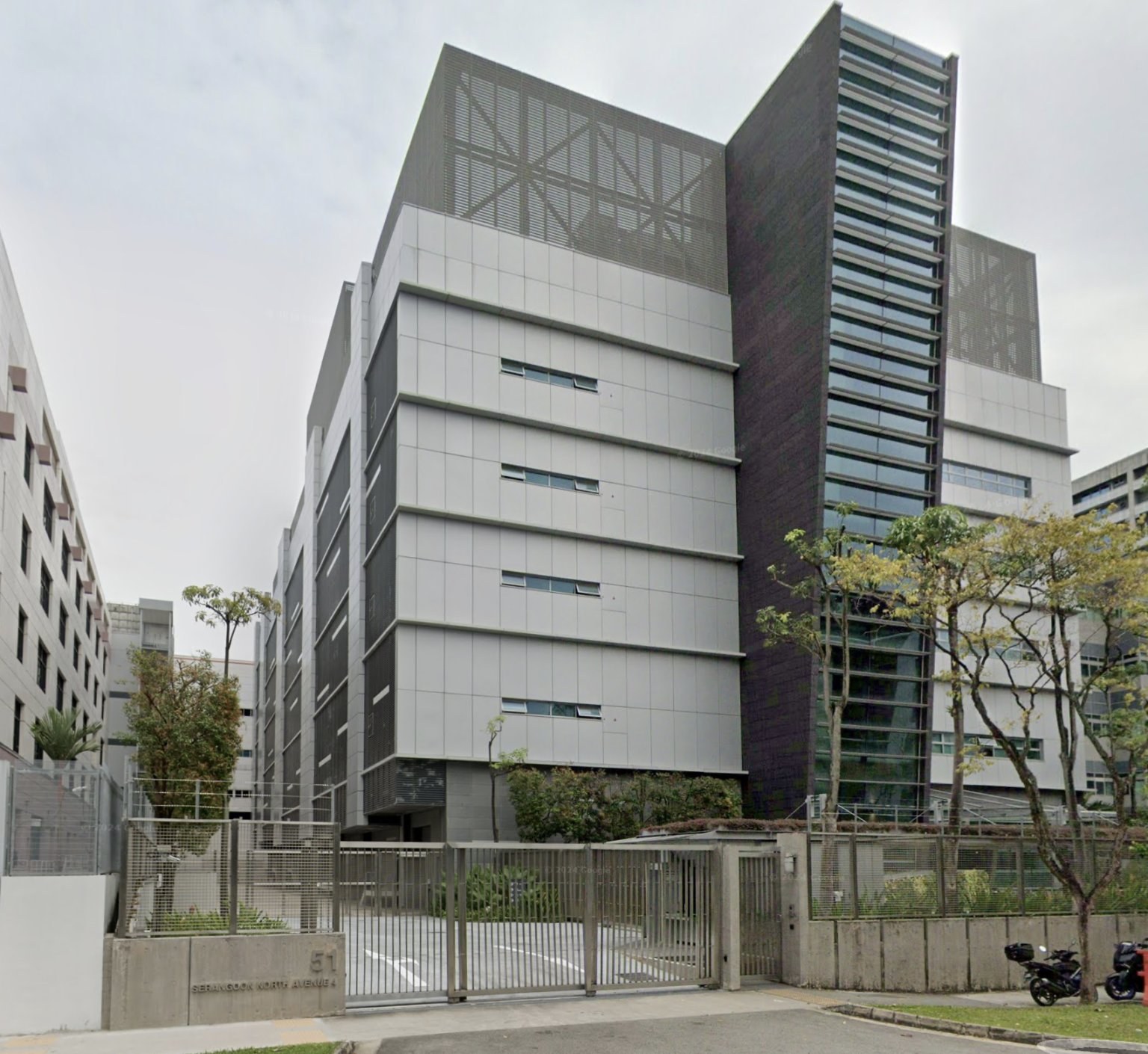
Ten months after listing as Singapore's first global data centre REIT, NTT DC REIT has delivered its maiden full-year reading — and the more telling number sits in a separate SGX filing dated the same day. Independent valuers Newmark Valuation & Advisory and Cushman & Wakefield Regional appraised the six-property portfolio at US$1,670.2 million as at 31 March 2026, lifting the carrying value 11.3% above the US$1,500 million in purchase consideration paid at IPO on 14 July 2025. NAV per unit grew from US$0.95 at IPO to US$1.14 — a 20.0% increase; adjusted NAV per unit US$1.08.
This is a US$170 million accounting gain crystallised inside a single financial year, against zero acquisitions and one renewed master services agreement. It is the kind of result that quietly answers the structural question every cross-border S-REIT IPO faces in year one: did the assets price correctly, or did the underwriters hand investors a discount?
Where the Uplift Came From
The asset-by-asset breakout matters because it tells you what the appraisers — not the manager — believe about each submarket. The headline 11.3% conceals significant dispersion. VA2 (Ashburn, Northern Virginia) rose from US$200M to US$250M (+25.0%). SG1 (Serangoon North, Singapore) rose from US$259M to US$310.7M (+20.0%). CA2 (Sacramento) rose from US$308M to US$333M (+8.1%). VIE1 (Vienna) rose from US$271M to US$291.5M (+7.6%). CA1 (Sacramento) rose from US$250M to US$263M (+5.2%). CA3 (Sacramento) rose from US$212M to US$222M (+4.7%). Portfolio total: US$1,500M → US$1,670.2M (+US$170.2M, +11.3%).
VA2 in Ashburn and SG1 in Singapore lead at +25% and +20%. Both sit in the world's tightest data centre submarkets. Northern Virginia runs at 98.8% contracted capacity per DC Byte's Q1 2026 read, even after 664 MW of new supply landed in the first three months of the calendar year. Singapore runs at 95.0% contracted with most pipeline already pre-committed; the manager notes there were "no new contracts from Jan to Mar 2026" not from weak demand but from supply unavailability.
The valuation shift rebalanced the portfolio's geographic exposure without any acquisitions. Northern California's share fell from 51.3% of portfolio at IPO to 48.9% at 31 March 2026. Singapore's share rose from 17.3% to 18.6%, surpassing Vienna at 17.5%. Tier-1 markets carried the year.
Within the Sacramento cluster (36% of IT load), CA2 was the bright spot at +8.1%, anchored by 99.8% occupancy, a 7.1-year WALE and the Fortune 100 US automotive tenant that contributes 31.5% of monthly base rent. CA1 strengthened sharply over Q4 — occupancy jumped from 90.3% at 31 December to 93.6% at 31 March, the strongest gain in the portfolio — as the manager's flagged backfill commencements landed. CA3 trails at +4.7% with 89.9% occupancy now the softest reading in the portfolio; the valuers are paying for what is leased.
VIE1 in Vienna landed at +7.6%. The submarket is small (63.7 MW commissioned at Q1 2026) but supply-constrained by high land, power and construction costs. CBRE projects EU vacancy will reach 6.5% by end-2026 — an all-time low.
The DPU Beat
Distribution per unit of 5.56 US cents for the period from 14 July 2025 (Listing Date) to 31 March 2026 — 2.6% above the IPO Forecast of 5.42 US cents. Gross revenue of US$164.8 million beat forecast by 2.5%; net property income of US$74.9 million beat by 2.3%; distributable income of US$57.5 million beat by 2.5%. Net finance costs of US$14.9 million ran 3.3% below forecast, helped by the disciplined 70% fixed-rate debt structure and the weighted average all-in interest rate of 4.01%.
The maiden distribution will be paid on 29 June 2026. Cum-distribution period ends 18 May 2026, with ex-date 19 May and record date 20 May.
The SG1 MSA — A 23% Reversion Pricing Above the Market Band
The single most consequential operational event of the year is not in the headline FY25/26 reversion of 8.5%. NTT Singapore Pte. Ltd. — the sponsor-related anchor at SG1 — renewed its Master Services Agreement on 31 March 2026, raising rent from S$385 per kilowatt to S$474 per kilowatt. That is a 23% reversion, with fixed 5% annual escalations, on a three-year term to 31 March 2029 (extended from a one-year arrangement).
The pricing context matters. The manager's own market data, sourced from DC Byte, places Singapore's wholesale and hyperscale rate range at S$380 to S$450 per kilowatt per month. The renewed NTT Singapore rate of S$474/kW sits roughly 5% above the top of that disclosed market band. This is not a reversion that catches up to market; it is a reversion that prices through it. The SG1 asset valuation rose 20% on the same DC Byte underlying that describes "persistent imbalance, with latent demand continuing to exceed accessible capacity."
Including the SG1 MSA, the portfolio's effective rental reversion for FY25/26 is 13.7%, not 8.5%. The 23% increment will be recognised in 1Q FY26/27. Portfolio weighted average rental escalation stepped from 2.7% at the 9M reading to 3.1% at year-end, with 89.4% of leases now on fixed escalators.
NTT Singapore returned 0.3 MW of contracted capacity in the renewal and remains the SG1 anchor at 2.7 MW. The manager is "in active discussions with prospective tenants" to backfill the 0.3 MW. SG1 spot occupancy dipped 1.7pp to 91.8% as a result, but WALE doubled from 0.9 years to 1.8 years on the term extension — a quality-for-volume trade the trust may replay across the rest of the portfolio over the next 18 months.
A Stronger Balance Sheet Than the One That Listed
Aggregate leverage closed FY25/26 at 29.2%, down from 32.5% at 31 December 2025 and 35.0% at IPO. After the 29 June 2026 distribution, leverage rises to a still-comfortable 31.3%. Interest coverage strengthened to 4.2x. Total debt of US$517 million sits across 45% EUR / 30% USD / 25% SGD, with no maturities for the next two financial years. 100% of total assets remain unencumbered. US$320 million of headroom to the 40% leverage ceiling currently; ~US$201 million post-distribution.
The growth funnel is open. And the manager has now named what it expects to fund through it.
ROFR, Fee Structure, Portfolio Quality — Three Priorities Made Explicit
The FY25/26 deck names three FY26/27 priorities in tightened language compared to the 9M update three months earlier:
— SG1 MSA Renewal (delivered): +23% uplift, 5% annual escalations, three-year term.
— Potential Change to the Management Fee Structure (timing slipped): the 9M update targeted "implementation by 1H FY26/27"; the FY25/26 deck now targets the EGM in 3Q FY26/27 — a one-quarter slip, still within the broad FY26/27 window. Not a red flag; fee structure changes for S-REITs typically need careful sequencing with circular publication.
— Strengthening Portfolio Quality — Capitalising on Sponsor's ROFR pipeline. The language matters. "ROFR" is a Right of First Refusal — a contractual claim, not a soft pipeline. NTT GDC, the sponsor's global data centre platform, now runs 1,626 MW in operation plus 776 MW planned across 92 sites — an addressable acquisition universe far larger than the trust's current 90.7 MW. This is the first time the maiden filings have framed the sponsor relationship in contractual rather than aspirational terms.
Reading the Markets
Submarket commentary draws on DC Byte data: Sacramento at 94.8% contracted (96.1 MW supply / 91.1 MW take-up at Q1 2026; rates US$125–175/kW/month); Northern Virginia at 98.8% contracted (3,999 MW supply with 664 MW added in Q1 alone; rates US$130–235/kW/month); Vienna at 91.5% contracted (63.7 MW supply; rates €95–120/kW/month); Singapore at 95.0% contracted (730.9 MW supply; rates S$380–450/kW/month).
The manager is "mindful of ongoing geopolitical uncertainties and the potential impact on global demand, supply chains and capital market conditions" — boilerplate but worth noting in a portfolio that is 63.9% US-located by valuation.
The Read
Three things change after this filing.
First, the IPO pricing is validated — not by the manager's commentary but by two independent valuers in a separate Rule 703 disclosure. VA2 and SG1, the two assets in the tightest markets, ran hardest. The revaluation re-weighted the portfolio toward Tier-1 markets without a single acquisition.
Second, the next quarterly reading is structurally higher than this one. The SG1 MSA renewal at +23% reversion — priced above the disclosed Singapore market band — lands in 1Q FY26/27. The portfolio's effective rental reversion has stepped from 5.1% (1H) to 9.2% (9M) to 13.7% (FY25/26 including SG1). The slope is the story.
Third, the language has tightened. The 9M update's "potential acquisition of an asset in a Tier-1 DC market from the Sponsor" has become an explicit "Sponsor's ROFR pipeline" — a contractual rather than aspirational framing. With US$320 million in current debt headroom (~US$201 million post-distribution), NTT GDC's 2,400+ MW global platform as the acquisition universe, and an EGM on the management fee structure already scheduled for 3Q FY26/27, the operating cadence for the next 18 months is now mapped.
What to watch: which Sponsor asset comes through the ROFR first, what the fee structure circular reveals when it lands, and whether the SG1 0.3 MW backfill closes at or above the new MSA rate of S$474/kW. Any one moves the next reading materially.
Maiden filings usually answer the question "did the IPO work". This one answers it and points at what comes next.